All countries →

Philippines

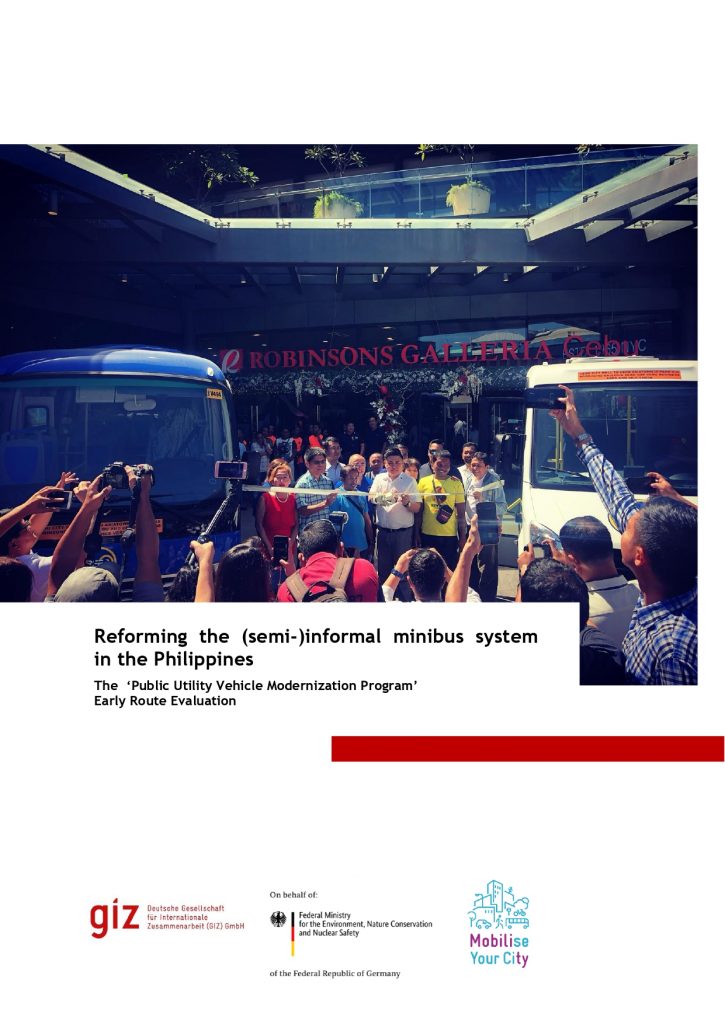
The Philippines, an archipelagic nation with varying local terrains and situations, faces varying challenges on access, mobility, and GHG emissions. The government has outlined its goals in the Nationally Determined Contributions (NDC) Implementation Plan (NDCIP) and the National Transport Policy (NTP), which are centered around desigining a provide a people-oriented national transport system that is safe, comfortable, accessible, safe, sustainable, and affordable. These policies aim to move away from the traditional approaches to transport challenges by designing cities around people-mobility and low-carbon transport.
Related News


Time to be Accountable at Transport and Climate Change Week

The 8th Transport and Climate Change Week took place in Berlin under the motto “Time to...
Read more

Transforming Transport in Asia: Innovations and Insights for a Low-Carbon Future

Aiming to chart a sustainable path for transportation towards zero emissions by mid-century and ensuring climate...
Read more

Join a Network of Data and MRV Experts

Our experts from Colombia, Uganda, Indonesia, Thailand and the UNFCCC are expirienced with the practical challenges...
Read more

Do Net Zero Targets Drive Ambitious Climate Action in the Transport Sector?

A growing number of economy-wide net zero targets have been announced in recent years. Together they...
Read more

Free Online Course Transport Data: From MRV to Action

“Transport Data: From MRV to Action” is an innovative and entertaining online course about the Measurement,...
Read more

Delivering Peer Networks for Sustainable Mobility

From the 11th to the 15th of September, the 6th edition of the Transport Week took...
Read more

Enhancing Transparency for NDCs in Asia: Technical Training by UNFCCC Secretariat and GIZ

Fathimath Raufa Moosa is Monitoring and Evaluation Officer at the Ministry of Environment and Energy of...
Read more

Experiencing Gender Bias at Her Workplace

The issue of whether women have received equal treatment wherever they are is still present as...
Read more