
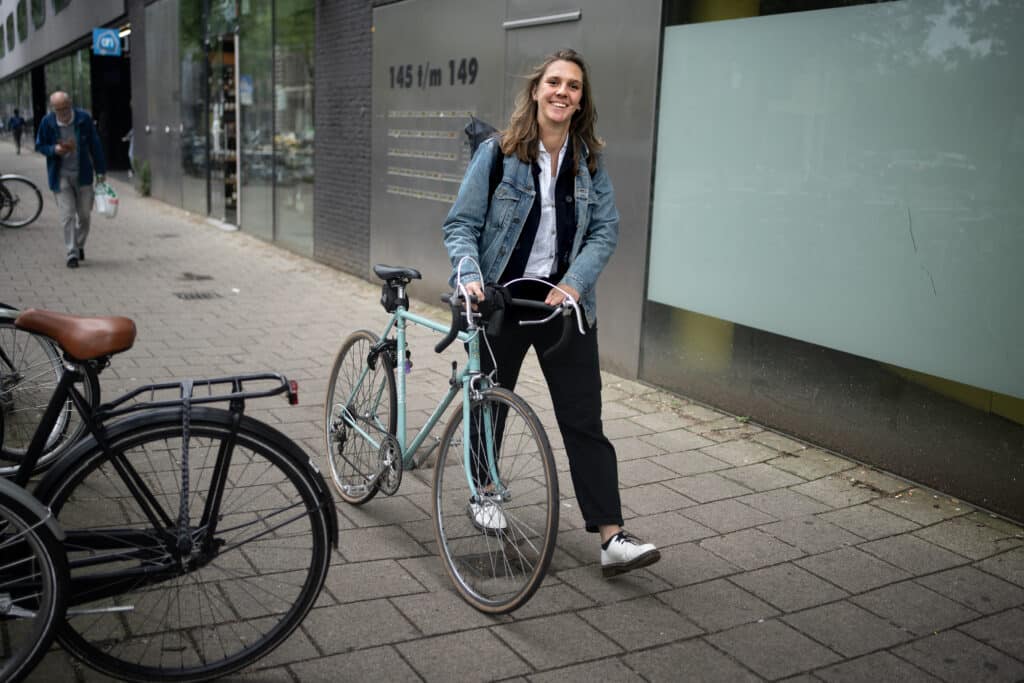
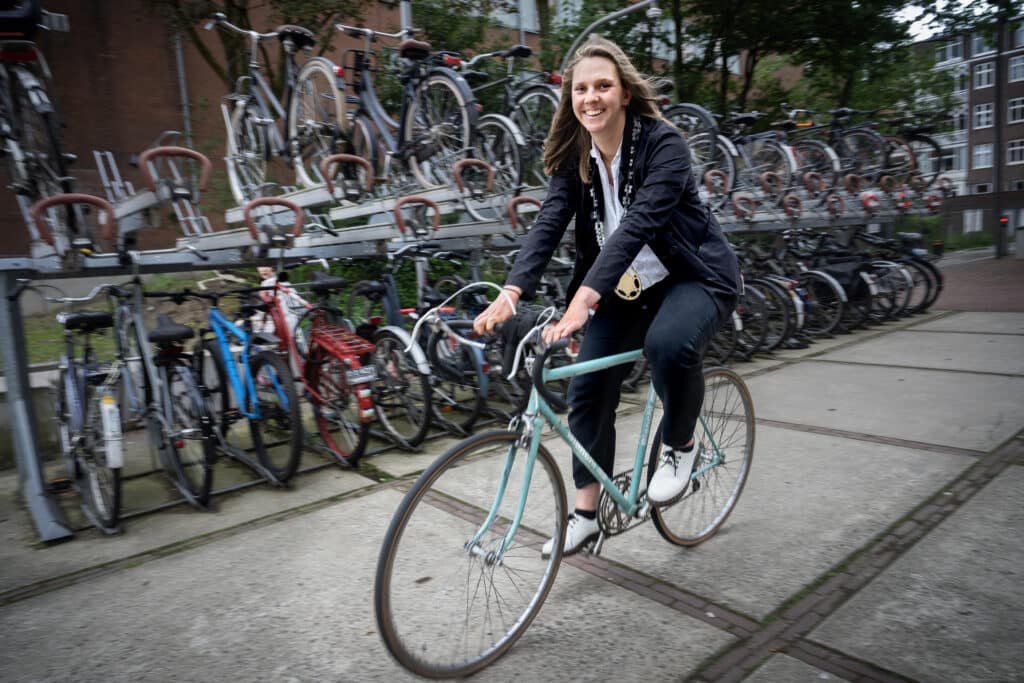
Romee Nicolai is Bicycle Mayor of Amsterdam and project and research coordinator at BYCS, she is the founder of the Bike Kitchen UvA, a community repair space at the University of Amsterdam, and was named as one of TUMI’s Remarkable Young Voice in Transport 2025. She is currently working on the development of Spaak, a new cycling hub within the neighbourhood-focused cycling programme Zaandam Oost.
How did you first get into cycling, and what did confidence on the bike look like for you back then?
Growing up in Amsterdam, cycling was simply part of everyday life. Like many Dutch children, I learned to ride a bike at a young age and used it to get to school, visit friends, and explore the city by myself. Because cycling was so normal around me, I never really thought about “becoming a cyclist.” That said, confidence is something that develops over time. As a child, my confidence came from having safe streets, cycling education at school, and seeing everyone around me cycle. The environment made it easy to build trust in my own abilities, wandering around.
Lastly, I think everyone has vivid memories about their first bicycle. The first bike that I remember was a pink mountain/ city bike that allowed me to explore the city on my own and helped to build confidence as a young cyclist.
If a street feels stressful or unsafe, even experienced cyclists may avoid it. Real cycling confidence comes when people of all ages and abilities feel that cycling is a natural option.
Has your idea of “cycling confidence” changed over time?
Absolutely. As a child, cycling confidence meant being able to ride safely and independently. Today, I see it as much broader. Cycling confidence goes beyond individual skills; it’s about whether people feel welcome, safe, and comfortable in public space. As Bicycle Mayor, I’ve learned that confidence is often shaped more by the environment than by the person. If a street feels stressful or unsafe, even experienced cyclists may avoid it. Real cycling confidence comes when people of all ages and abilities feel that cycling is a natural option.
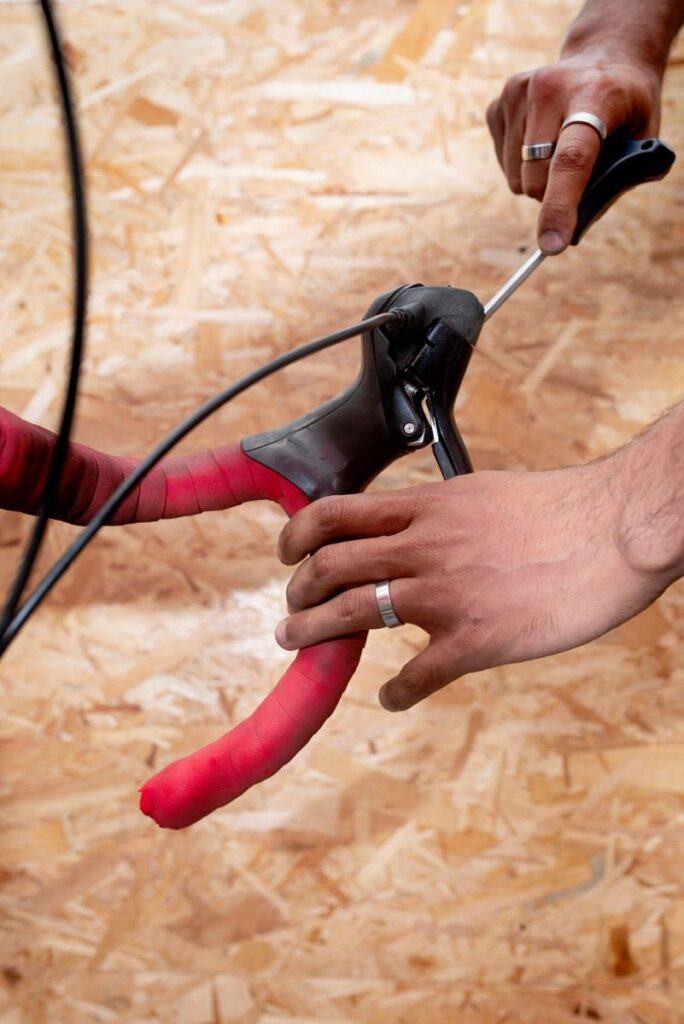
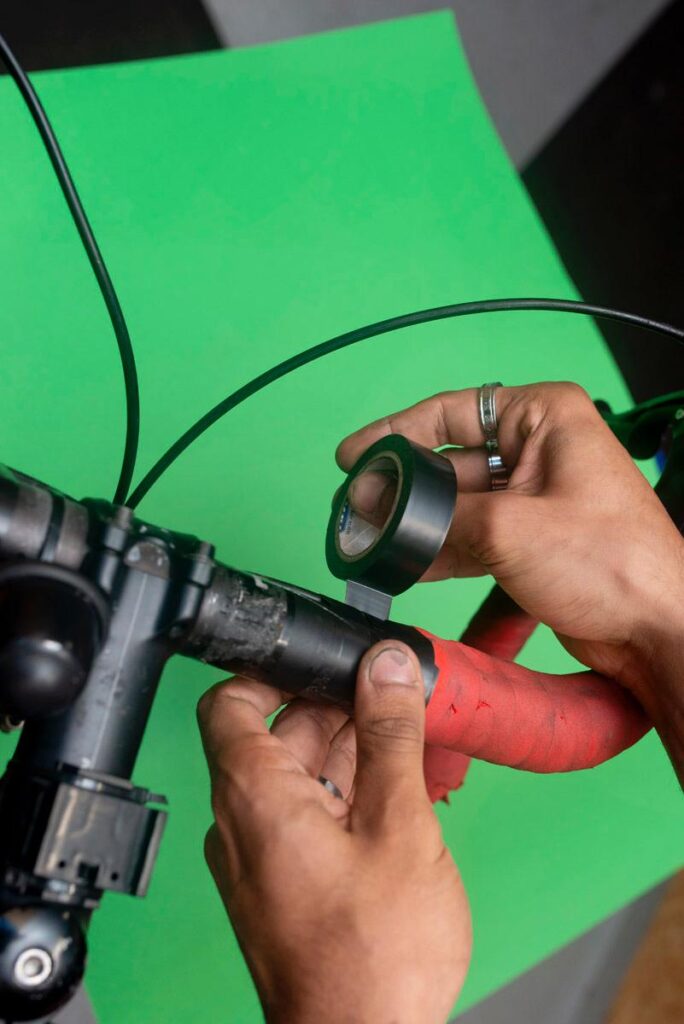
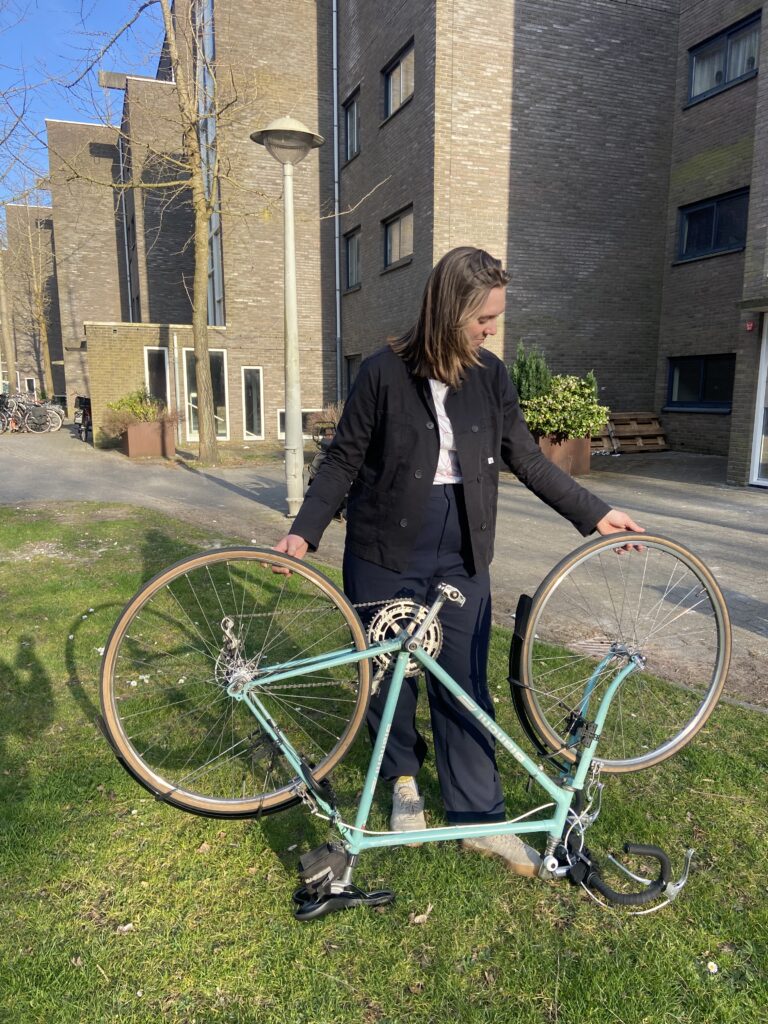
What that means to me today is being able to ride safely and feeling empowered to take ownership of my own mobility choices. By building my own racing bike and founding the Bike Kitchen, I’ve learned how bicycle repair creates a sense of independence and resilience that extends far beyond cycling itself. You’re not only learning how to fix a bike, but you are learning to trust your own abilities, solve problems, and also stimulate your own cycling confidence.
Was there a particular moment or person that helped you become a more confident cyclist?
Rather than one specific moment or person, my confidence grew through everyday experiences. Cycling was simply part of daily life in Amsterdam, from going to school and visiting friends to visiting places independently. Looking back, what made the biggest difference was having the freedom to explore the city by bike from a young age. These everyday trips helped me become more familiar with my surroundings, remembering the names of streets and routes, making decisions independently and trusting my capabilities.
Over time, that sense of confidence became less about cycling itself and more about the freedom and autonomy you experience by using the bicycle: You can go wherever you want and most often in Amsterdam the bicycle is definitely the most convenient transport mode.
How has cycling changed the way you experience city life?
Cycling really connects me to the city. You can greet people, feel the wind (or rain, in the Dutch case) on your face, hear the sounds of the city, and notice the small details that make streets unique. Cycling creates a direct connection between people and place that is difficult to experience through any other mode of transport. As an urban planner and Bicycle Mayor, cycling also helps me understand the city from a human perspective, rather than just a planning perspective.
Confidence doesn’t come from being fearless. It comes from experience. Falling down, having a broken chain, being lost — that’s all part of it.
What would you tell yourself during your very first rides?
I would say: trust the process and stay curious. Confidence doesn’t come from being fearless; it comes from experience. Falling down, having a broken chain, being lost, is all part of it. Remember that if cycling feels difficult or stressful, it is not always because of your abilities but it may be because a certain environment needs to work better for people. Make it fun and allow yourself to explore!
What tools, communities, or resources would you recommend to someone building their cycling confidence?
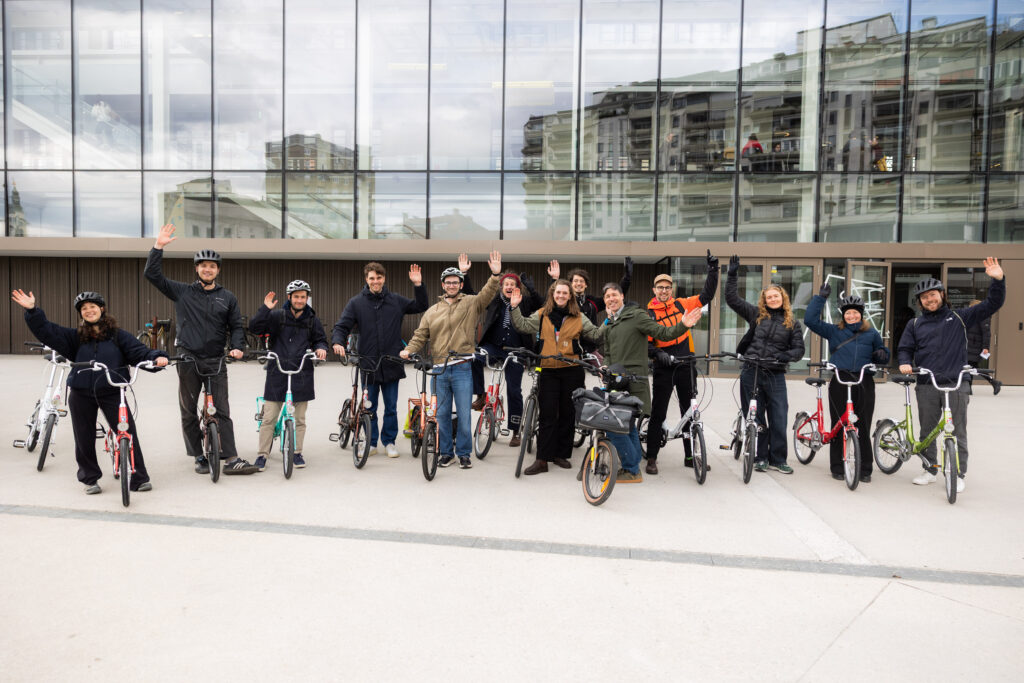
First of all, for me community has always been the most important resource. Initiatives like the Bike Kitchen at the University of Amsterdam show how learning basic bicycle maintenance and meeting other people can build confidence and independence. I would also encourage people to join local cycling groups, community rides, or advocacy organisations. Confidence grows when people feel supported and see others like themselves cycling.
Secondly, simply spending time on a bicycle is one of the best ways to build confidence. Start with routes and environments that feel comfortable, and gradually explore new places at your own pace. Confidence is not something you suddenly have but it develops through experience and familiarity.
Lastly, remember that confidence looks different for everyone. There is no right way to be a cyclist. The beauty of cycling is actually that there are endless forms of expressions of cycling and can be adapted in different lifestyles and environments: whether you ride every day or only occasionally, what matters is feeling comfortable, safe, and empowered to choose the bicycle when it works for you.
It’s World Bicycle Day on 3 June. Read our latest article on how to ride confident and join our Social Media campaign!
Meet Romee at Velo-city 2026 in Rimini 16-19 June.
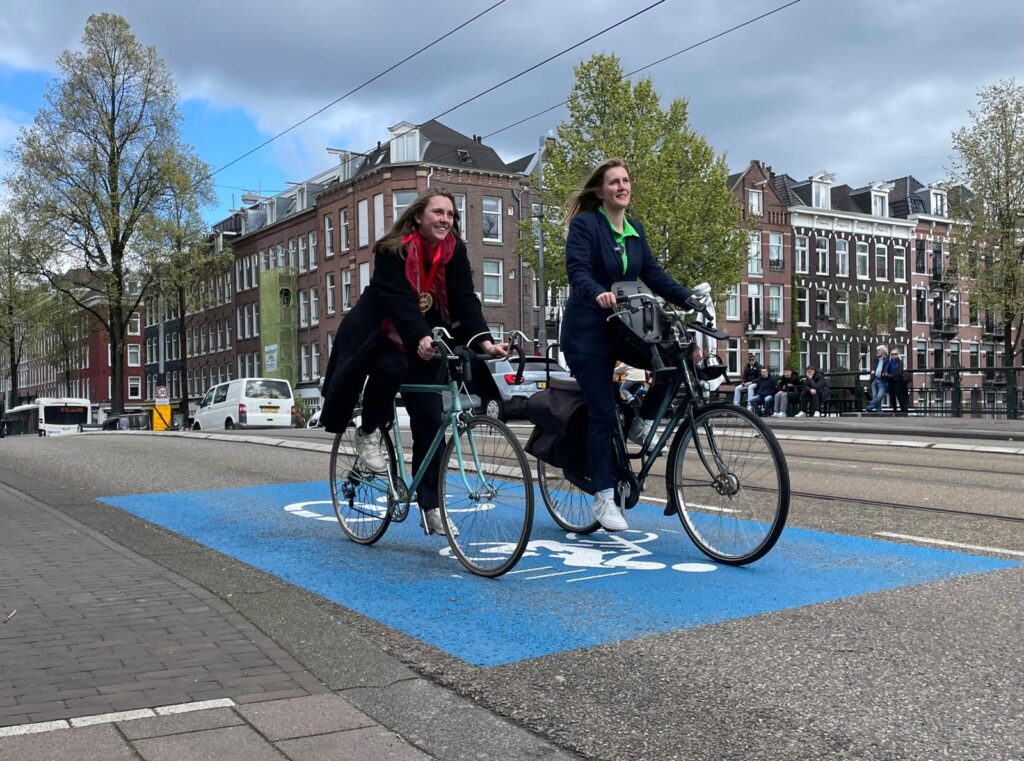
 Nederland, Amsterdam, 20240522
Romee Nicolai, fietsburgemeester van Amsterdam
Foto: Kick Smeets / Gemeente Amsterdam 2024
Nederland, Amsterdam, 20240522
Romee Nicolai, fietsburgemeester van Amsterdam
Foto: Kick Smeets / Gemeente Amsterdam 2024
Valerie Katthagen
valerie.katthagen@giz.de
Visit profile
You are currently viewing a placeholder content from reCAPTCHA. To access the actual content, click the button below. Please note that doing so will share data with third-party providers.
More Information