
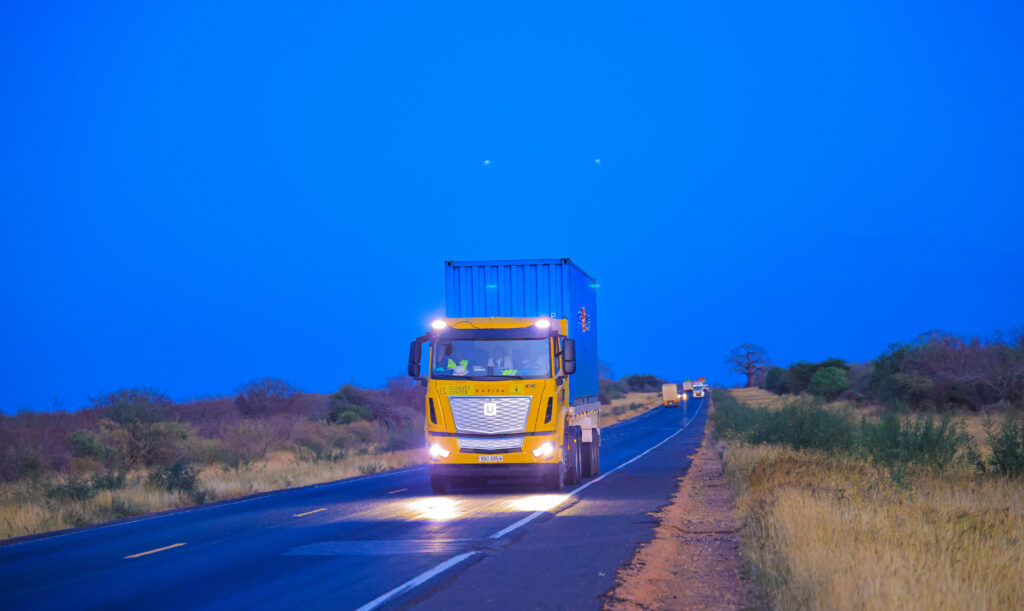
On 18 May 2026, Nairobi woke to an unusual quiet. Bus stages stood empty, matatus and boda-bodas were off the road, and thousands of commuters walked long distances after drivers downed tools to protest soaring fuel prices. The disruption was swift, visible, and deeply personal. But for those working on sustainable transport, it was not a surprise.
The 2026 global energy crisis, triggered by the closure of the Strait of Hormuz and a 65% spike in global crude prices1, exposed what transport planners have long understood: as long as urban mobility depends on imported fossil fuels, it will remain hostage to events no city can control. The question is not whether to transition to electric mobility. In a growing number of countries, that question has already been answered. The question now is how fast, and how well.
Three countries: Kenya, Chile, and Indonesia offer different but equally instructive answers.
Kenya’s situation is almost paradoxical. Over 90% of its electricity already comes from renewable sources, yet its transport system still runs overwhelmingly on imported diesel and petrol2. In 2024, Kenya spent approximately US$ 4.76 billion on petroleum imports, illustrating the massive outflow of capital lost each year instead of funding infrastructure, jobs, or public services.
Recently, when diesel surged more than 23% in a single pricing review cycle, the consequences were immediate: fare hikes, service withdrawals, and thousands of commuters on foot. The vulnerability is structural, not incidental.
But the response has been equally structural. Kenya Power reported cumulative revenues of US$2.96 million from e-mobility charging between 2023 and 2026, a signal that the market is real and growing. And following the May protests, President Ruto announced:
I am also making a declaration that the first 100,000 electric vehicles to be imported into Kenya, whether for public service or private use, will be duty-free, even as we continue to court investments from electric vehicle manufacturing companies to establish production facilities in Kenya.
William Ruto, President of Kenya
Electric mobility, in Kenyan policy discourse, has moved from environmental aspiration to economic and national security priority. Yet the policy is not without friction: the Finance Bill 2026 proposes a 16% VAT on EVs even as duty-free imports move forward, a contradiction analysts warn could blunt the incentive and complicate Kenya’s manufacturing ambitions3. The Promotion of Electric Mobility in Kenya project works to close that gap, building the policy, technical, and private-sector capacity the transition still needs.
Chile is the most advanced example in the Global South of what happens when a government treats public transport electrification as a core infrastructure commitment rather than a pilot project.
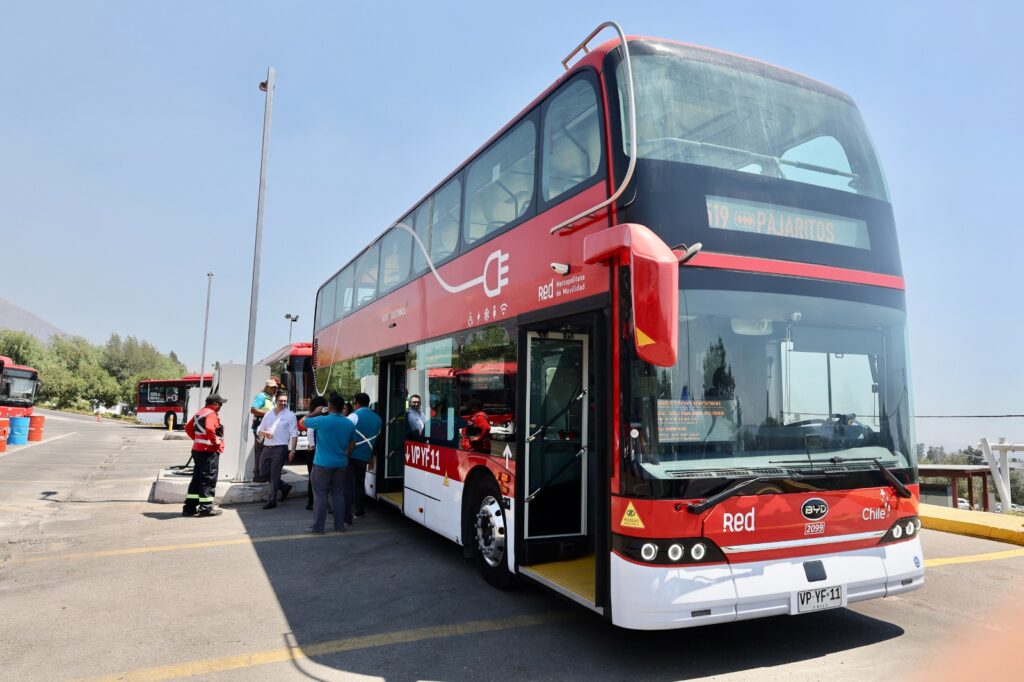
Santiago now operates the largest electric bus fleet outside of China. Starting from just two electric buses in 2017, the city reached over 2,500 by 2025 and 4,000 by early 2026 representing 68% of the total fleet4. The key was not a single bold decision, but sustained political will across three successive governments, combined with a National Electromobility Strategy that sets clear, binding targets: 100% electrification of urban public transport, including buses, taxis, and colectivos by 2040. This transition towards electric mobility has also meant new employment opportunities for women5.
Chile’s renewable energy base, nearly 60% of electricity generation already comes from renewables, means the environmental case for the switch is unambiguous. And with 95% of domestic oil imported, the economic case is equally clear6.
For the Ministry of Energy, electromobility is the road to the future. We are committed to that… We are ready to promote electromobility, because it is the way to reduce pollution, have clean energy, and achieve our energy independence.
Hugo Briones, Undersecretary of the Chilean Ministry of Energy
The remaining challenge is no longer building Santiago’s fleet, it is turning that experience into something the rest of the region can use. GIZ is implementing a triangular cooperation: Trans-Cero mediante regulación y la mejora operativa, positioning Chile as the regulatory reference point for Colombia, Mexico, and Peru as they build the harmonised standards Latin America’s transport sector still lacks.
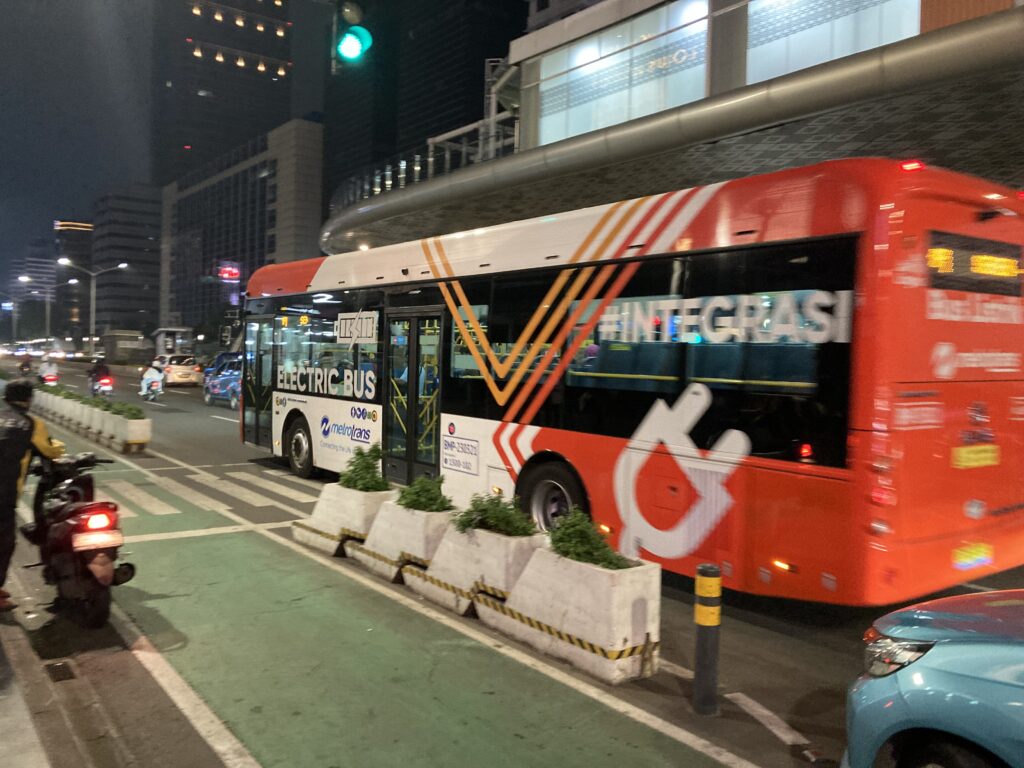
Indonesia presents the transition at a different order of magnitude. With over 280 million people, the world’s third largest two-wheeler market (after China and India) and the largest in Southeast Asia, and informal transport – ojeks, angkots, becaks – deeply embedded in the daily mobility of millions, the stakes of getting this right are enormous.
The government has set ambitious targets: 2 million electric cars and 12 million electric two-wheelers by 2030, backed by duty exemptions, VAT reductions, and a roadmap for domestic EV manufacturing7. Indonesia holds the world’s largest nickel reserves and is by far the largest producer, adds an industrial dimension to the transition. The country is not just a market for electric vehicles, but a potential anchor of the global EV battery supply chain.
All our motorcycles will be converted into electric motorcycles… All cars, all trucks, tractors, must run on electric power. So, those wealthy enough to own a Lamborghini or a Ferrari can go ahead and pay for gasoline at the world price.
Prabowo Subianto, President of Indonesia
Implementation, however, has been uneven. Incentive schemes for electric motorcycles were abruptly discontinued following the 2024 elections, and subsequent relaunch deadlines were missed, undermining confidence among operators and manufacturers at a critical moment. The challenge is familiar: ambitious national targets that outpace the policy consistency and financing structures needed to translate them into behavioural change at the operator level.
Electrifying the existing fleet cannot be the only lever pulled; reducing two-wheeler dependency also means offering a genuine alternative to private ownership. GIZ supports that shift through the Sustainable Urban Public Transport programme, working with BAPPENAS and the Ministry of Transportation to help metropolitan areas build integrated, lower-carbon public transport systems.
Kenya, Chile, and Indonesia are very different contexts. But they are each, in their own way, making the same argument: that electric mobility is no longer a climate side project. It is a response to fuel dependency, economic vulnerability, and the daily reality of millions of people whose mobility should not be at the mercy of a geopolitical event on the other side of the world, nor be treated as a bargaining chip in political shifts.
The technology exists. The renewable energy base is there or being built. The policy frameworks are taking shape. What turns potential into reality is the hard, unglamorous work of financing structures that reach informal operators, regulatory frameworks that outlast election cycles, and capacity building that empowers the people running these systems on the ground.
These three stories are not playing out in isolation. In June 2026, at London Climate Action Week, a coalition of governments and more than 40 business groups, think tanks, and civil society organisations launched “Electrify Now,” a campaign to raise electricity’s share of final global energy consumption from around 21% today to 35% by 2035, a pace roughly four times faster than today’s. Its founding members include the European Commission, Brazil, Türkiye, Australia, Ethiopia, Canada, the UK, the Philippines, the Republic of Korea, the IEA, and IRENA, and its scope explicitly covers accelerating electrification across industry, buildings, and transport, not power generation alone.
The multilateral process is moving in parallel. Türkiye, which hosts COP31 in Antalya this November, and Australia, which is leading the formal negotiations, have put forward the same “35% by 2035” target as a flagship priority for the summit’s action agenda, echoing the COP28 pledge to triple renewables capacity8. That same momentum reaches beyond electrification specifically: in April, representatives of 57 countries met in Santa Marta, Colombia, for the first “Conference on Transitioning Away from Fossil Fuels”, a sign of the wider diplomatic push these three countries’ efforts are now part of.
Seen against this backdrop, Kenya’s duty exemptions, Chile’s National Electromobility Strategy, and Indonesia’s EV targets stop looking like three separate national experiments. They are early, uneven instalments of the same global shift that Electrify Now and COP31 are now trying to formalise and accelerate. That shift is proof the mission is achievable, and a preview of the financing gaps, policy inconsistency, and informal-sector blind spots a global target will have to reckon with if it is to mean anything beyond Nairobi, Santiago, or Jakarta.
The global targets are being set. What determines whether they are met is whether the people running buses, colectivos, ojeks, and matatus today are brought into the transition, not left to adapt to it after the fact. That is the work GIZ and its partners are already doing on the ground, and it is where the next chapter of this story will be written.
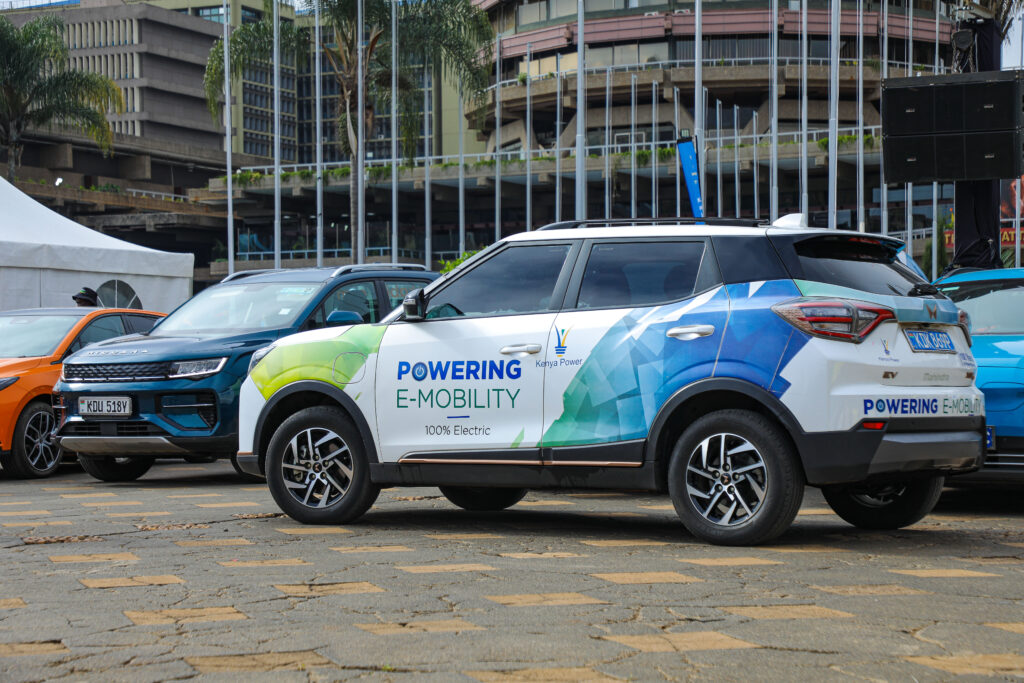
© Kenya Power & Lighiting Company (KPLC), Source: KPLC Conference EV Parade

Cynthia Kipsang
cynthia.kipsang@giz.de
Visit profile

Valerie Katthagen
valerie.katthagen@giz.de
Visit profile
You are currently viewing a placeholder content from reCAPTCHA. To access the actual content, click the button below. Please note that doing so will share data with third-party providers.
More Information