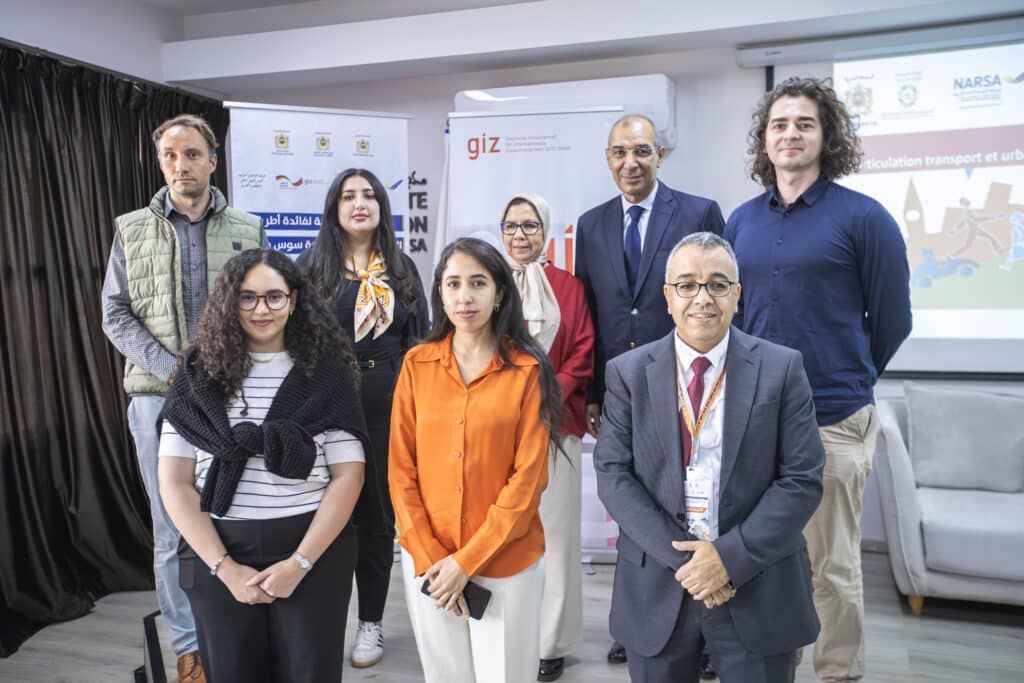
Road safety is far more than a technical issue – it forms the very foundation of sustainable and inclusive mobility. Without safety, trust cannot be established, and without trust, the transition to sustainable mobility and livable cities remains unattainable. Recognizing this, Morocco has placed road safety at the core of its mobility agenda, demonstrated notably by its hosting of the 4th Global Ministerial Conference on Road Safety in Marrakech in February 2025. Building on this commitment, a regional training session was held in Agadir from May 27 to 30, 2025, gathering over one hundred engineers and municipal representatives from across the Souss Massa region.
As part of its efforts to promote road safety and strengthen the capacities of local stakeholders, the National Road Safety Agency (NARSA) is organizing a series of training sessions on the Reference Guide for Road Safety and Sustainable Mobility Infrastructure in Urban Areas. These sessions, held for the benefit of local actors across the twelve regions of the Kingdom of Morocco, aim to harmonize practices and enhance the quality of road safety infrastructure at the territorial level, and promote safer and more sustainable mobility.
Under the framework of the Second National Road Safety Strategy (2017–2026), Morocco aims to reduce annual road fatalities to fewer than 1,900 by 2026, down from approximately 3,500 in 2022. This strategy prioritizes the protection of the most vulnerable groups—pedestrians, users of two- and three-wheeled motorized vehicles, children under 14, drivers involved in single-vehicle accidents, and professional transport operators.
The implementation of this strategy is coordinated by multiple institutions, primarily the Ministry of the Interior and the Ministry of Transport and Logistics (MTL), through the National Road Safety Agency (NARSA). It is further supported by partnership agreements, the development of sustainable urban mobility plans, and the improvement and safeguarding of existing and future road infrastructure.
Within the “Sustainable Mobility with Renewable Energies in Morocco” (DKTI VI) cooperation project—commissioned by the German Federal Ministry of Economic Cooperation and Development (BMZ) and implemented by GIZ in partnership with the Ministry of Energy Transition and Sustainable Development (MTEDD) and the city of Agadir—a road safety training was organized. The event was held in collaboration with the Souss Massa regional directorate of NARSA and the Regional Directorate of the Environment of Souss-Massa.
The training focused on the practical implementation of the Reference Guide for Road Safety and Sustainable Mobility Infrastructure in Urban Areas, a key resource jointly developed by NARSA, the Ministry of Equipment, Housing, Urban Planning, and the Ministry of Interior. This guide serves as a crucial tool to harmonize road safety practices nationwide, ensuring that safety standards are consistently and systematically integrated into urban and transport development projects.
Sustainable mobility and road safety are intrinsically linked objectives. Together, they contribute to healthier, safer, and more inclusive urban transport systems. Road safety plays a fundamental role in encouraging modal shifts away from private cars toward walking and cycling by creating safe environments that build user trust—especially for vulnerable groups.
| Sustainable Mobility | Road Safety | How They Interact |
| Encourages active, clean, and accessible modes | Creates safe infrastructure protecting all users, especially pedestrians and cyclists | Safe infrastructure builds trust in active modes, encouraging sustainable transport choices |
| Reduces emissions, pollution, and congestion | Reduces accidents and injuries, improving public health | Safer streets support modal shifts away from cars, lowering pollution and congestion |
| Lowers economic, human, and environmental costs | Prioritizes vulnerable users to prevent fatalities and serious injuries | Protecting vulnerable users sustains low-cost, low-impact mobility choices |
| Promotes equitable access to transport | Ensures inclusivity for all users, including people with reduced mobility | Inclusive safety measures make sustainable transport accessible to everyone |
| Supports integrated urban planning | Enhances public spaces by reducing traffic risks and conflicts | Safer streets contribute to livable cities that foster sustainable mobility |
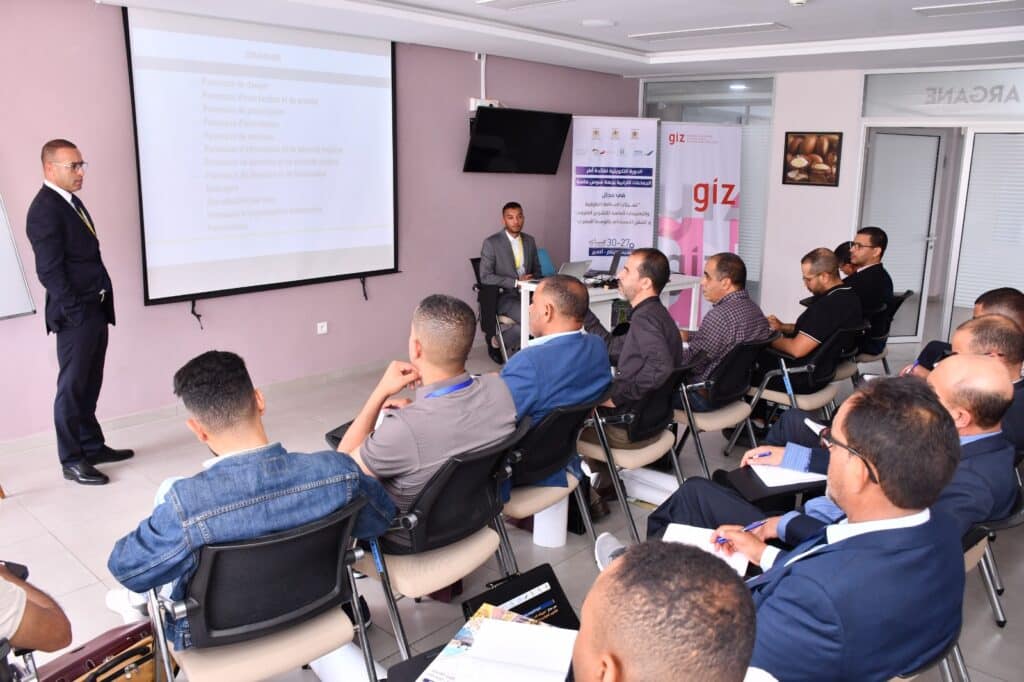
The three-day training placed particular emphasis on the needs of vulnerable road users—especially pedestrians, cyclists, and children—and promoted synergies between road safety and active mobility. Approximately 100 participants—including engineers, technicians, and local authority staff from across the Souss Massa region—engaged in a mix of theoretical sessions and hands-on case studies, enabling them to apply the principles of the Reference Guide directly to urban planning and project implementation.
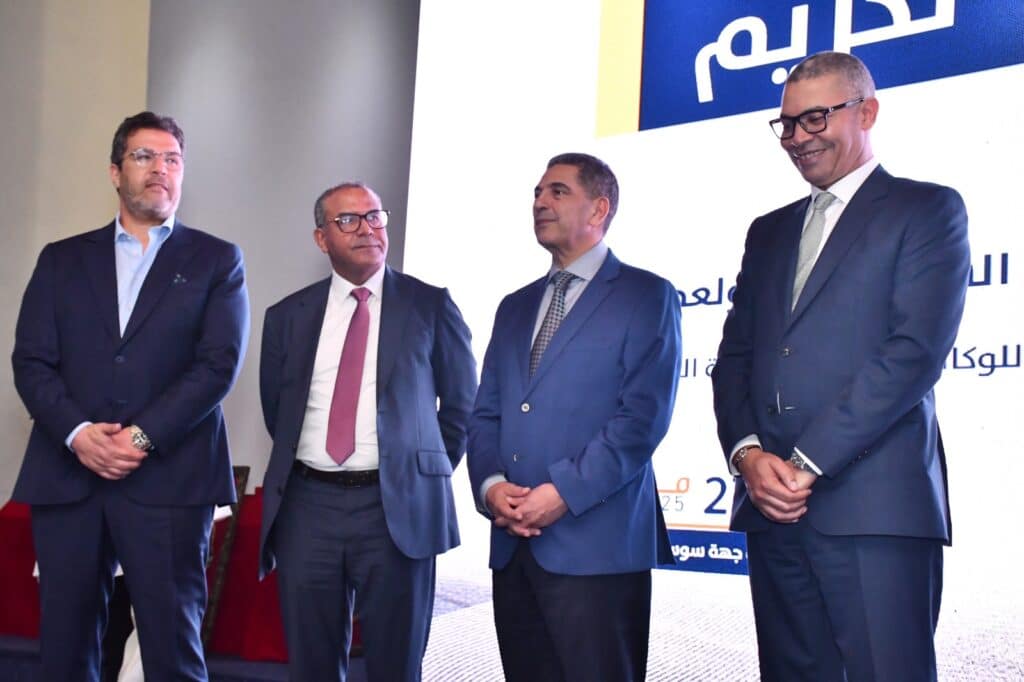
The training was inaugurated by high-level officials, including Mr. Saïd Amzazi, Wali of Souss-Massa, Mr. Karim Achengli, President of the Regional Council, Mr. Zakaria Hachlaf, Secretary General of the Ministry of Energy Transition and Sustainable Development, and Mr. Nacer Boulaajoul, Director General of NARSA, alongside GIZ Morocco representatives and local authorities—underscoring the event’s strategic importance.
The introductory seminar, led by urban development and mobility expert Dr. Mohamed Hanzaz, provided a comprehensive framework to understand the intersections of urban planning, sustainable mobility, and road safety. Topics included urbanization dynamics, principles of sustainable urbanism, multimodality, and the impacts of motorization, setting the stage for subsequent detailed training.
Following this, sessions concentrated on the Reference Guide, which spans 24 chapters and offers clear methodologies, core principles, and model design solutions tailored to diverse urban environments. Key topics covered included:
By focusing on these areas, the training equipped participants to effectively apply the guide’s recommendations, supporting cities in upgrading public spaces, enhancing safety, and fostering inclusive, sustainable mobility.
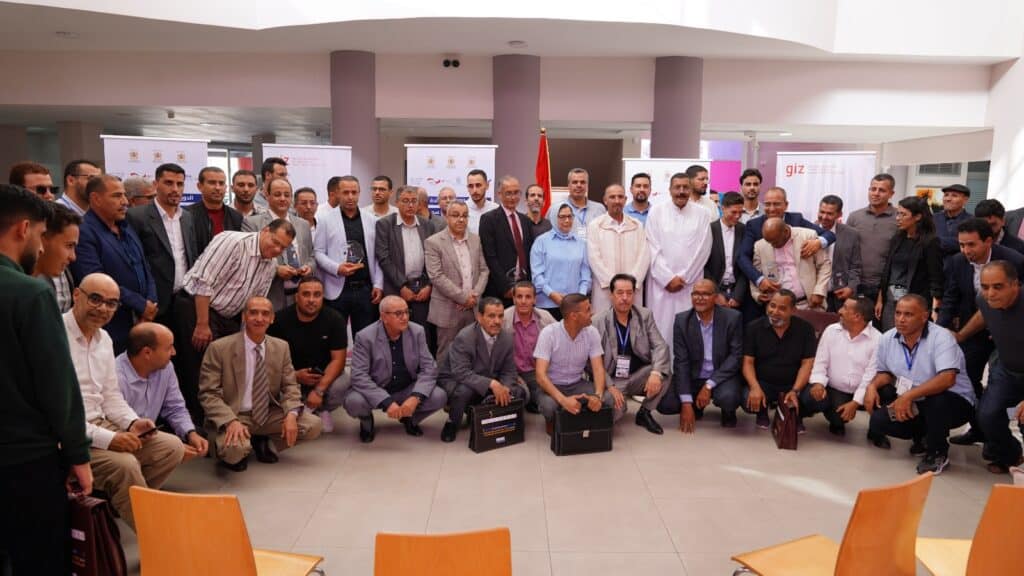
These training efforts form part of a broader, nationwide initiative to modernize Morocco’s urban infrastructure and advance sustainable mobility—particularly in preparation for major international events such as the 2030 FIFA World Cup.
The Sustainable Mobility with Renewable Energies in Morocco (DKTI VI) project is and is commissioned by the German Federal Ministry for Economic Cooperation and Development (BMZ) and implemented by the Deutsche Gesellschaft für Internationale Zusammenarbeit (GIZ) GmbH in partnership with the Moroccan Ministry of Energy Transition and Sustainable Development (MTEDD) and the City of Agadir.
The DKTI VI team of GIZ organized the training course. 2025 ©GIZ Morocco by ADDICUBE

Mohammed Aherfoune
mohammed.aherfoune@giz.de
Visit profile