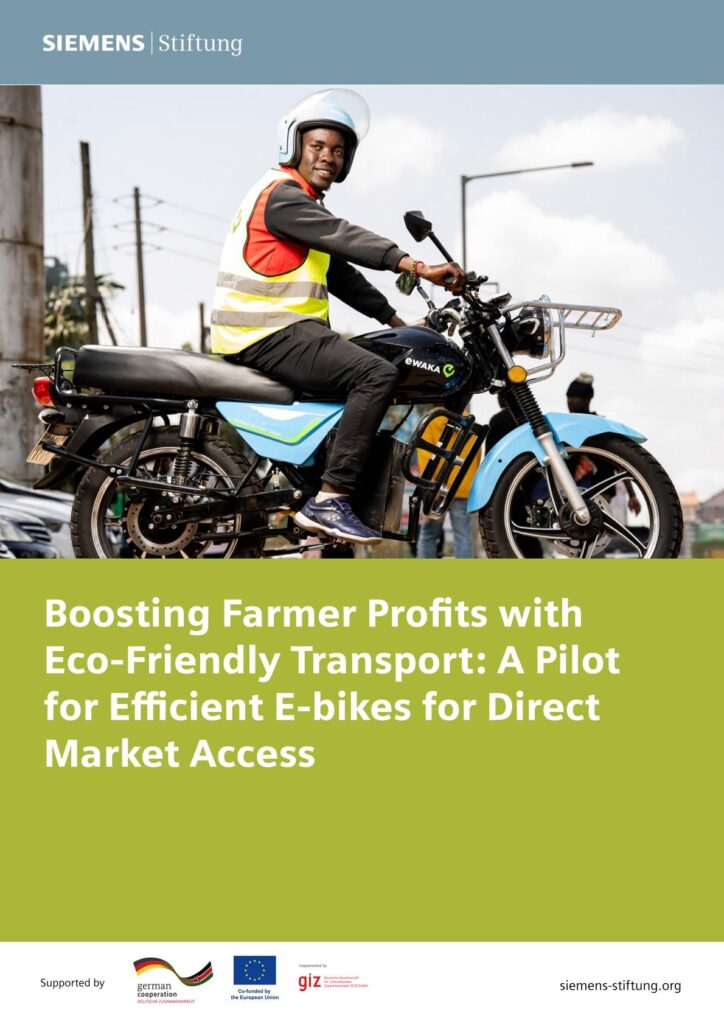
This pilot assessed the potential of e-bikes to improve market access, reduce transport costs, and increase incomes for smallholder farmers in peri-urban Nairobi and Kiambu. Initial direct-to-market deliveries using e-bikes and youth riders resulted in an average 43.94% income increase for participating farmers, alongside gains in delivery speed and produce freshness. However, challenges such as fragmented demand, coordination constraints, and cultural barriers limited scalability. The project therefore pivoted to a platform-based logistics model serving aggregators, vendors, and SMEs through on-demand, leasing, and purchase options. This approach sustained farmer benefits indirectly, supported youth employment, and demonstrated that scalable clean agricultural logistics are most viable when embedded within broader market coordination and partnership ecosystems.