
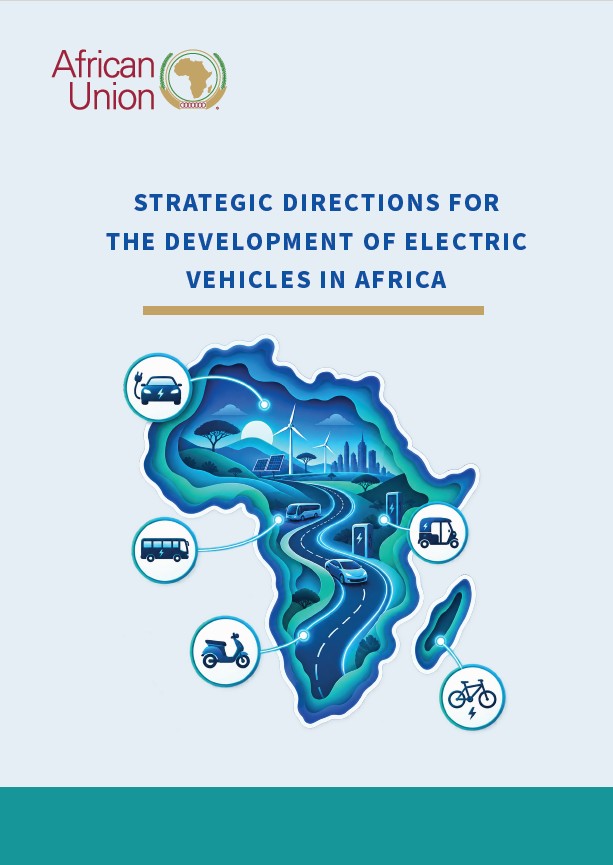
Africa now has a shared compass for electric mobility. Adopted by African Transport and Energy Ministers, the African Union’s Strategic Directions set out how Member States can build coherent policies, markets and industries for electric vehicles across the continent.
With the Strategic Directions for the Development of Electric Vehicles in Africa, the African Union Commission has published the first continental policy framework on electric mobility. Developed together with the United Nations Environment Programme (UNEP) and the United Nations Economic Commission for Africa (UNECA), the framework was adopted by African Transport and Energy Ministers at the 5th Ordinary Session of the AU Specialised Technical Committee on Transport and Energy in Johannesburg on 30 April 2026.
The document offers Member States guidance for designing national e-mobility policies, strategies and regulations. It addresses the key barriers African countries report, from high upfront costs and missing charging infrastructure to limited local manufacturing and skills, and groups its recommendations into eight pillars:
A central message is that Africa’s high share of commercial vehicles, such as minibuses, buses and two- and three-wheelers, makes a strong business case for electrification, and that the transition can strengthen energy security, industrial development and regional integration at the same time.
Through the LEAP project (Leapfrogging to Zero Emission Transport), GIZ works with the African Union Commission to LEAP supports the AU in implementing the framework. The Strategic Directions provide an important reference point for this cooperation and for all partners working towards zero-emission transport in Africa.
More information: African Union website
You are currently viewing a placeholder content from reCAPTCHA. To access the actual content, click the button below. Please note that doing so will share data with third-party providers.
More Information