
This story is part of our #StoriesOfChange series, where we share how our colleagues and partners are making sustainable mobility real and changing lives along the way. Read more stories here.
For the Republic of the Marshall Islands, the ocean is the road. Across widely dispersed atolls, ships connect communities to food, medicine, education, public services and economic opportunities. Reliable maritime transport is essential to everyday life, yet operating a fleet across such vast distances also brings significant dependence on imported fuel and contributes to greenhouse gas emissions.
How can an island nation keep its communities connected while reducing the climate impact of its shipping?
For the Marshall Islands, this question emerged alongside its international climate leadership. At the 2015 United Nations Climate Change Conference in Paris (COP21), the Marshall Islands’ then Foreign Minister Tony deBrum and Germany’s Environment Minister Barbara Hendricks agreed to work together on maritime decarbonisation. Their aim was to bring climate commitments into a sector that life across the Pacific depends on.
Two years later, the two countries launched the Low Carbon Sea Transport (LCST) project, implemented by GIZ. The goal was to make domestic shipping cleaner and more efficient, while still meeting the needs of island communities.
Getting there required a clear picture of the local transport system. It also required technologies suited to local conditions, people trained to operate and maintain new vessels, and institutions able to sustain change over time.
Over almost nine years, the project brought these pieces together. The team collected transport and emissions data and built low-emission boats with traditional Marshallese canoe builders. It also supported maritime training, contributed to national policy and helped bring a wind-assisted cargo vessel into the national fleet.
The result is a wealth of practical experience from a place where maritime connectivity is indispensable, and where climate action must respond to the realities of island life.
The project began with a fundamental question: how could the country reduce emissions from shipping without weakening the connections its communities depend on?
Answering it meant first understanding the existing fleet, routes, fuel consumption, operating practices and costs. Piecing this information together took considerable work, but the resulting baseline study gave partners a shared picture of the sector and a starting point for planning improvements.
It also showed that no single solution would fit every journey. Within the lagoons, smaller boats support daily life, while larger vessels carry cargo and passengers between atolls. Each setting needs its own technical answer, yet both depend on safe operations, suitable designs, manageable running costs and access to maintenance and capacity.
Rather than arriving with a ready-made technology, the partnership tested different approaches together with local partners, including the non-profit canoe-building organisation Waan Aelõñ in Majel (WAM), whose name means “Canoes of the Marshall Islands”.
This process revealed a central challenge for maritime decarbonisation: a new vessel only makes a lasting difference if the people and systems around it can support it. Equipment and materials must suit local conditions, crews need appropriate training, spare parts and repairs must be accessible, and institutions must be able to support operations over time. These considerations shaped the project’s work across lagoon transport, inter-atoll shipping, capacity building, policy and regional cooperation.
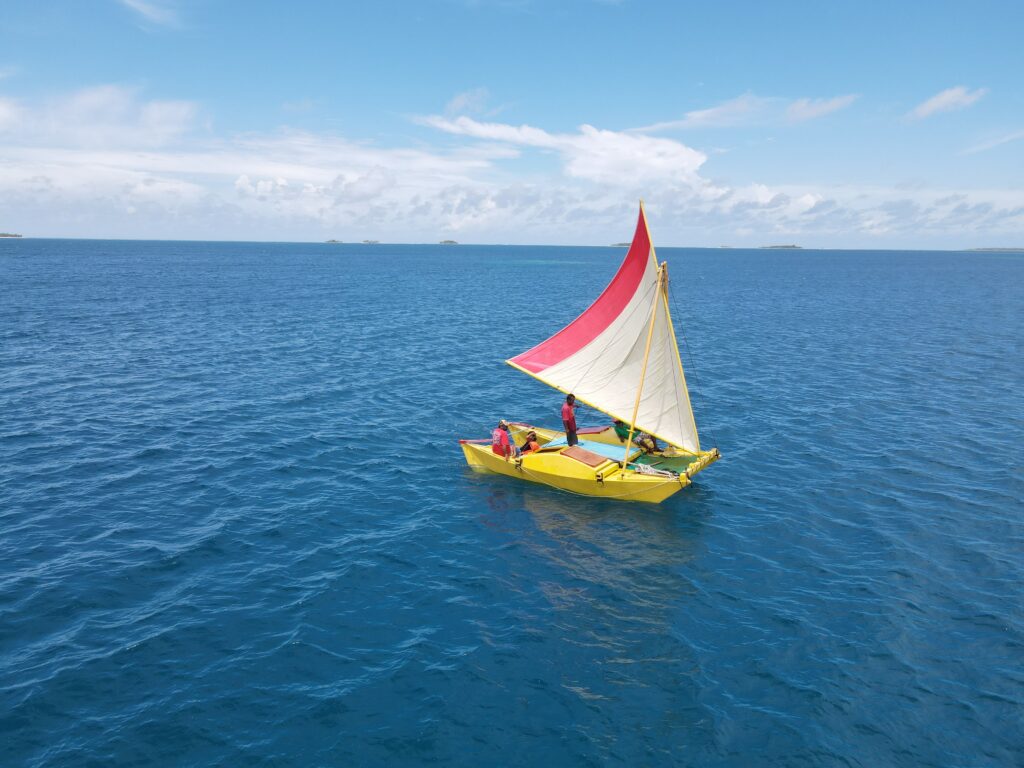
One strand of the project focused on smaller craft and the potential to strengthen local boatbuilding. Working with Waan Aelõñ in Majel (WAM), LCST supported the development of efficient canoes and catamarans for lagoon transport.
This work brought together technical innovation and Marshallese maritime knowledge. Local boatbuilding traditions offered an important foundation for exploring how boats could respond to contemporary transport needs. The collaboration also supported the development of construction manuals to enable continued local boatbuilding.
The yellow catamarans you see on the lagoon and that I will hopefully be able to sail during my time here, the WAM Catamaran and the WAM Proa, are results of these efforts, designed by WAM and GIZ project partners.
Andreas Pfaffernoschke, German Ambassador to the Marshall Islands
The work has continued beyond the initial prototypes. At least 15 boats have been built or are under construction, with applications across several atolls. WAM also independently transferred the construction techniques developed through LCST to traditional Marshallese canoe designs and continued its activities with follow-on funding. These developments demonstrate how project-supported knowledge can be adapted locally and carried forward by the organisations and communities involved.
Building local capacity remains essential to ensuring that solutions can be maintained and adapted to local needs. The experience also highlights the importance of supporting the people, facilities and organisations that make locally grounded innovation possible.
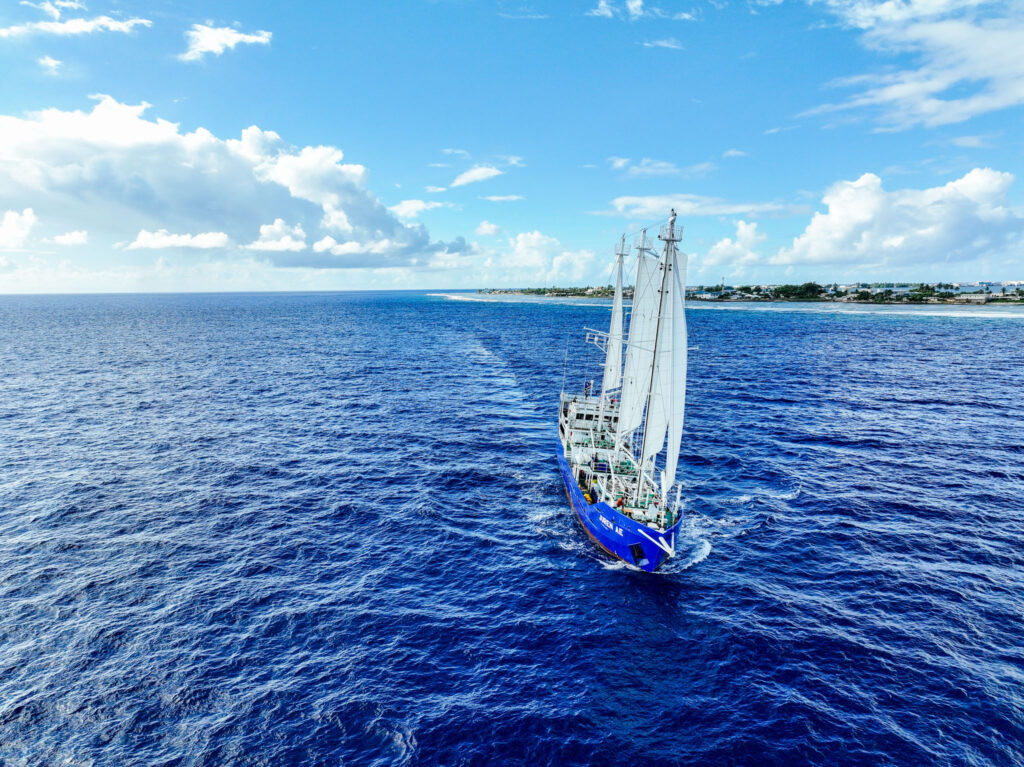
For transport between atolls, the project explored how wind could help reduce dependence on conventional fuel-powered propulsion.
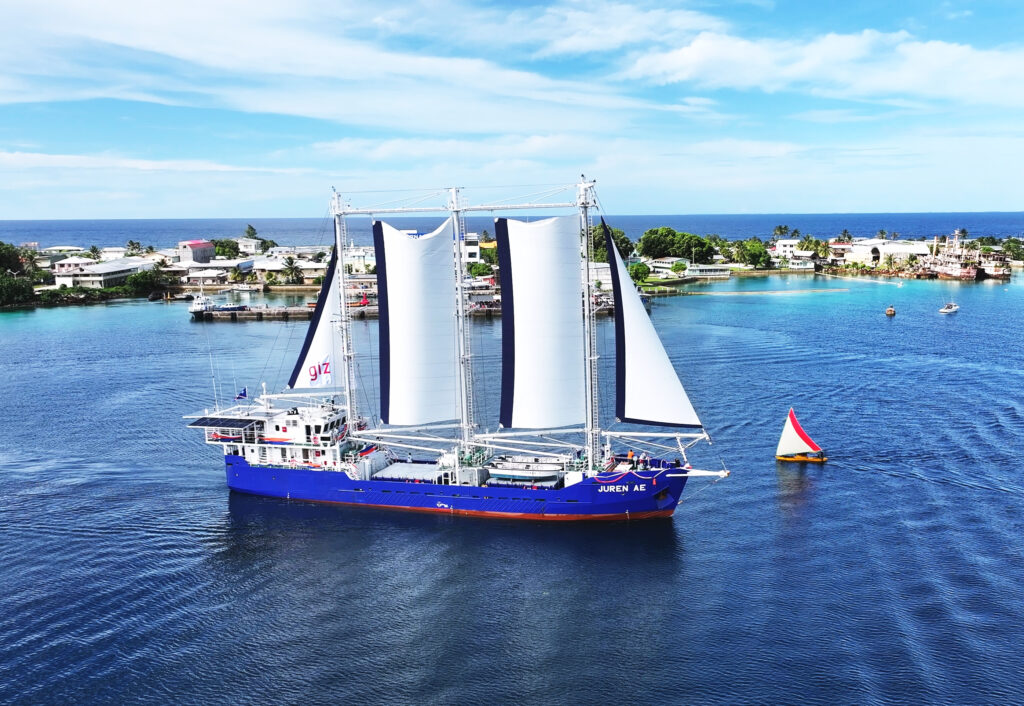
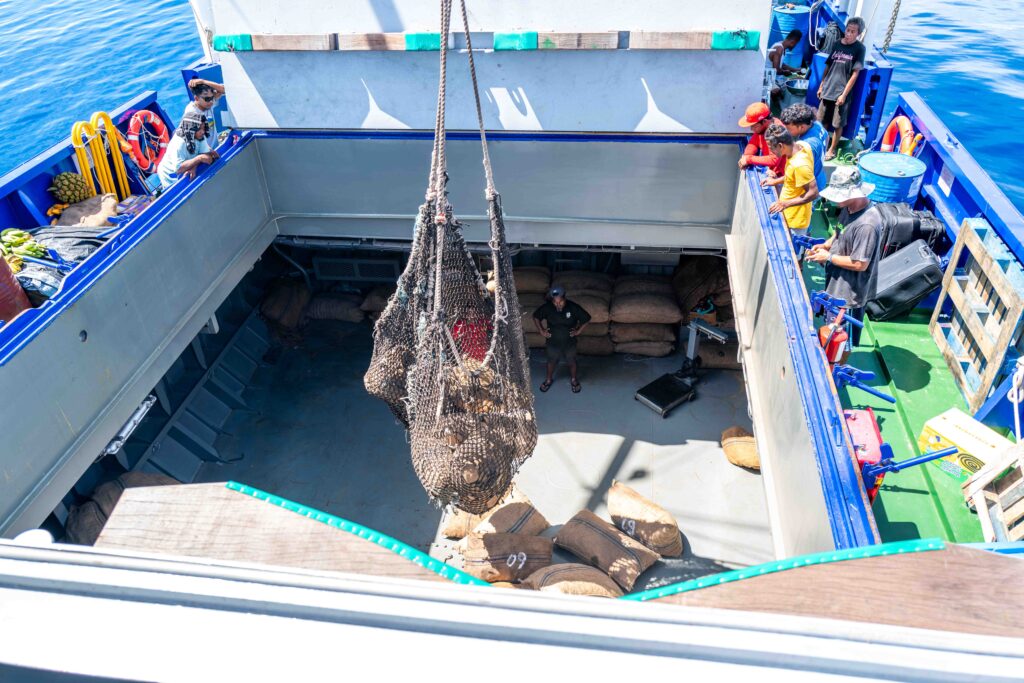
The SV Juren Ae became the most visible outcome of this work. Designed for cargo transport, this first-of-its-kind prototype combines wind-assisted sailing with a hybrid propulsion system. Its development involved international technical expertise and shipbuilding partners, while its intended role was rooted in the transport needs of the Marshall Islands.
After construction and sea trials, Juren Ae arrived in Majuro in July 2024 and was transferred into national service under the Marshall Islands Shipping Corporation (MISC).
The vessel has provided a practical learning platform for exploring the integration of wind propulsion and hybrid systems in inter-atoll shipping. Beyond the vessel itself, the project has generated experience in system integration, maintenance, crew training and the operational arrangements required to keep an innovative vessel in service. Its operation can also generate valuable knowledge about wind conditions, fuel consumption, power demand and vessel performance under real operating conditions.
This vessel is more than just a ship; it is a beacon of hope, a cornerstone of maritime education, training, and sustainable sea transport for the Marshall Islands.
Hilton Kendall, Minister of Transport, Republic of the Marshall Islands
This experience is helping clarify the technical and institutional requirements for operating wind-assisted cargo vessels over time. The technology and operating model continue to require learning, technical support and adaptation. Regular maintenance, access to spare parts, trained crews and adequate resources will be essential to sustaining the vessel’s contribution and informing future applications.
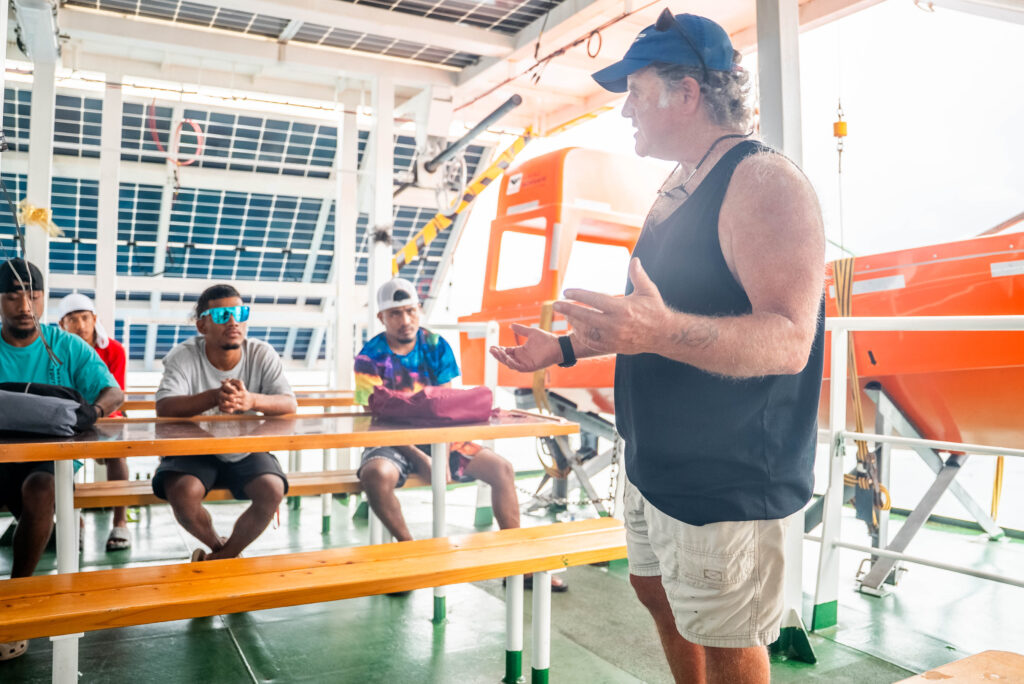
Alongside vessel development, LCST supported maritime education and training, including helping to establish the Jela Meto Training Center. Practical training helps prepare Marshallese seafarers to work with evolving maritime technologies and strengthens the link between innovation and national capacity.
The project also contributed to policy development, including the Sustainable Domestic Maritime Transport Roadmap and the Marshall Islands’ efforts to implement its climate ambitions in the shipping sector. The Republic of the Marshall Islands’ Nationally Determined Contribution 3.0 (NDC 3.0) explicitly references LCST, Juren Ae and WAM. This recognition illustrates how practical experience generated through the project has contributed to implementing the country’s existing climate commitments.
The Marshall Islands has also used its experience in international discussions on maritime decarbonisation, including at the International Maritime Organization (IMO) and the United Nations Framework Convention on Climate Change (UNFCCC). The project created opportunities to share lessons with regional partners interested in lower-emission shipping, including at the 55th Pacific Islands Forum Leaders Meeting.
Taken together, these activities reflect the breadth of the challenge. The transition requires suitable vessels and propulsion systems, alongside knowledge, skills, institutions, financing and long-term operational planning.
Almost nine years of cooperation have generated experience across different parts of the maritime transport system: establishing a baseline assessment, exploring low-carbon solutions for lagoon transport, developing wind-assisted cargo shipping, supporting maritime training and contributing to policy discussions and regional cooperation.
These activities have helped move the conversation towards the practical conditions required to make lower-carbon maritime transport sustainable over the long term.
The experience has also brought challenges into view. New technologies require maintenance, technical troubleshooting and access to spare parts. Damage to facilities or equipment can interrupt progress, while limited capacity and resources on site can make repairs difficult. These realities are part of the evidence that future projects must consider from the beginning.
The lessons concern how technologies are selected and adapted, how local expertise is developed, how operators are supported and how long-term responsibilities are organised. Planning for these elements together from the outset is essential to the continued operation of low-carbon maritime solutions and the transition of the wider transport system.
This experience is relevant beyond the Marshall Islands. Pacific countries differ in their geography, fleets, transport requirements and institutional arrangements. The questions asked, evidence gathered and practical lessons produced can help other countries assess their own pathways towards maritime decarbonisation.
Regional cooperation has also made tangible progress. In June 2026, the Pacific Blue Shipping Partnership (PBSP) Ministerial meeting in Majuro resulted in participating Pacific countries agreeing on a Charter for regional cooperation, knowledge sharing and maritime decarbonisation planning. The Charter provides a basis for continued collaboration across the region. Future investments and financing arrangements remain under preparation, and continued cooperation will be important to translating shared commitments into action.
As the bilateral LCST project concludes, its contribution lies in the knowledge, relationships and experience built along the way. The German-Marshallese partnership has connected climate ambition with local maritime needs, technical innovation and capacity development, generating practical experience that can inform future work in the Marshall Islands and across the Pacific.
For the Republic of the Marshall Islands, the ocean will remain the road connecting its communities. The continuing task is to make that journey cleaner, more reliable and more sustainable, while ensuring that the skills, institutions and partnerships can grow alongside the technology.
The project ”Transitioning to Low Carbon Sea Transport in the Republic of Marshall Islands (LCST)” is commissioned by the German Federal Ministry for the Environment, Nature Conservation, Nuclear Safety and Consumer Protection (BMUKN) through the International Climate Initiative (IKI) and implemented by Deutsche Gesellschaft für Internationale Zusammenarbeit (GIZ) GmbH in partnership with the Republic of the Marshall Islands and regional and international stakeholders.
SV Juren Ae and Waan Aelõñ in Majel WAM Catamaran sailing in the Majuro Lagoon ©GIZ/Chewy Lin
Francesca Comba
francesca.comba@giz.de
Visit profile
You are currently viewing a placeholder content from reCAPTCHA. To access the actual content, click the button below. Please note that doing so will share data with third-party providers.
More Information