

Chile operates the largest electric bus fleet in Latin America, so what can the rest of the region learn from its experience? To explore this question, 13 delegates from Paraguay, Uruguay and Panama travelled to Santiago to gain first-hand insights into the transition to e-mobility.
Public transport electrification represents a major opportunity to reduce emissions while improving urban air quality and operational efficiency, especially in contexts where clean electricity is readily available. Latin America is on its way to tapping into its existing clean electricity sources to shift to low emission transport. Many countries in in the region are moving forward with ambitious plans to introduce e-mobility measures into their public transport systems. The E-Motion programme for E-Mobility and Low Carbon Transportation, funded by the Green Climate Fund (GCF), the Development Bank of Latin America and the Caribbean (CAF) and the International Climate Fund (IKI), supports this transition by providing financial and technical assistance to ten countries in the region.
Unlike traditional combustion-based systems, electric public transport requires new policy frameworks and business models, as well as planning of infrastructure and charging strategies. Despite differing national contexts, countries transitioning to e-mobility face many common challenges and opportunities.
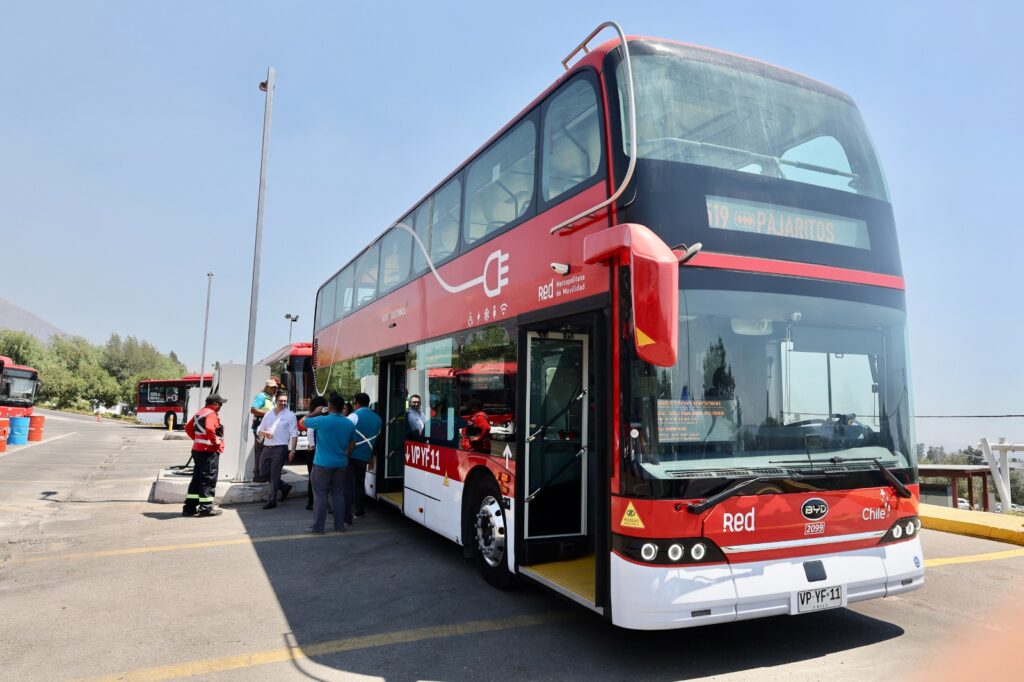
Countries advancing along different stages of the pathway to decarbonising transport through e-mobility face different challenges. Through their unique experiences, they accumulate valuable practical learnings from which others can benefit if the knowledge is shared. In this context, Chile, an early adopter of e-buses in public transport, has emerged as an important reference in the region. As part of the E-Motion programme’s activities, the country opened its doors to 13 delegates from public and private sector from Paraguay, Uruguay and Panama to provide insights into e-mobility transition.
The delegations expressed different needs, given their specific conditions and stage in the transport transition. Despite these differences, shared concerns include regulatory design, specialised technical knowledge and operational management.
Paraguay is ready to step forward with contracts for private parties to operate e-buses. The Paraguayan Transport Vice-minister, Emiliano Fernández, provided public-sector insights, highlighting their interest in transition regulations for smoother adaptations that consolidate public-private partnership and allow for a successful transition.
Having conducted pilot projects, Panamá is now preparing to scale up deployment. MiBus, the company tasked with the management of Panama City’s bus transportation system, raised questions on what this means for operational activities. Key topics included leveraging technology for system monitoring and its operational implications, as well as battery management to extend battery lifespan.
Uruguay is currently reforming transport systems and requires strengthening of institutional capacities. CODESA, a company that operates terrestrial transport in the Maldonado department, highlighted the opportunities of e-mobility from a business perspective and how informing decision makers of these opportunities is crucial for progress.
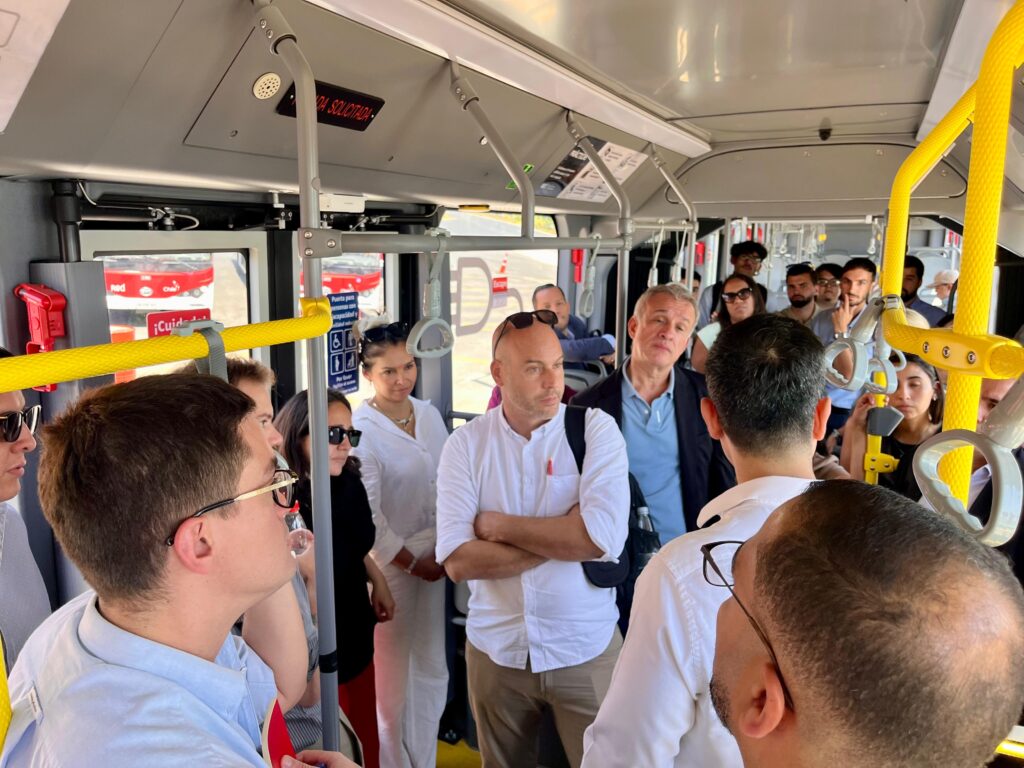
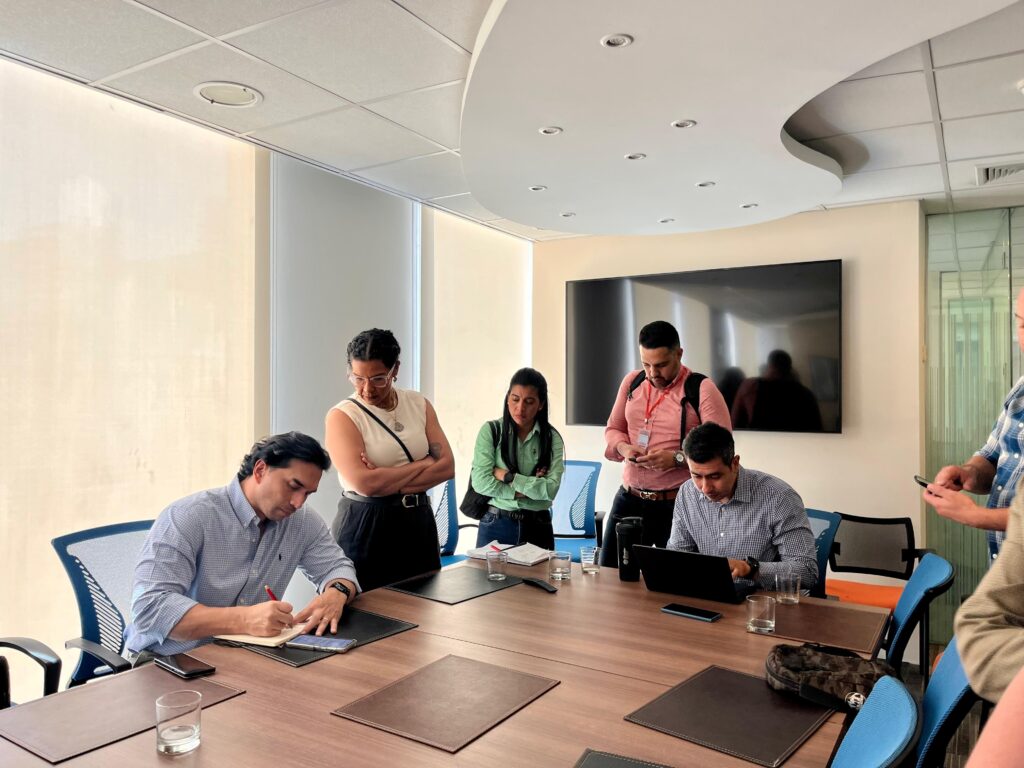
The exchange programme combined technical meetings, site visits and discussion panels into a four-day agenda designed to foster knowledge exchange and practical understanding. Sessions included the presentation of the second e-mobility report of the Directorate of Metropolitan Public Transport Direction of Santiago de Chile (DTPM), panels on the Latin American experience and prospects for regional expansion, the analysis of institutional and contractual frameworks, and business models and approaches to electrification, including revenue structures and risk management.
The delegations visited the Los Espinos e-hub and the system’s monitoring centre, where they obtained insights into operational practices of Santiago de Chile’s e-bus system. In a further technical visit to Valparaíso, the participants witnessed how e-bus regional operations challenges differ from the capital and how these specific challenges are addressed.
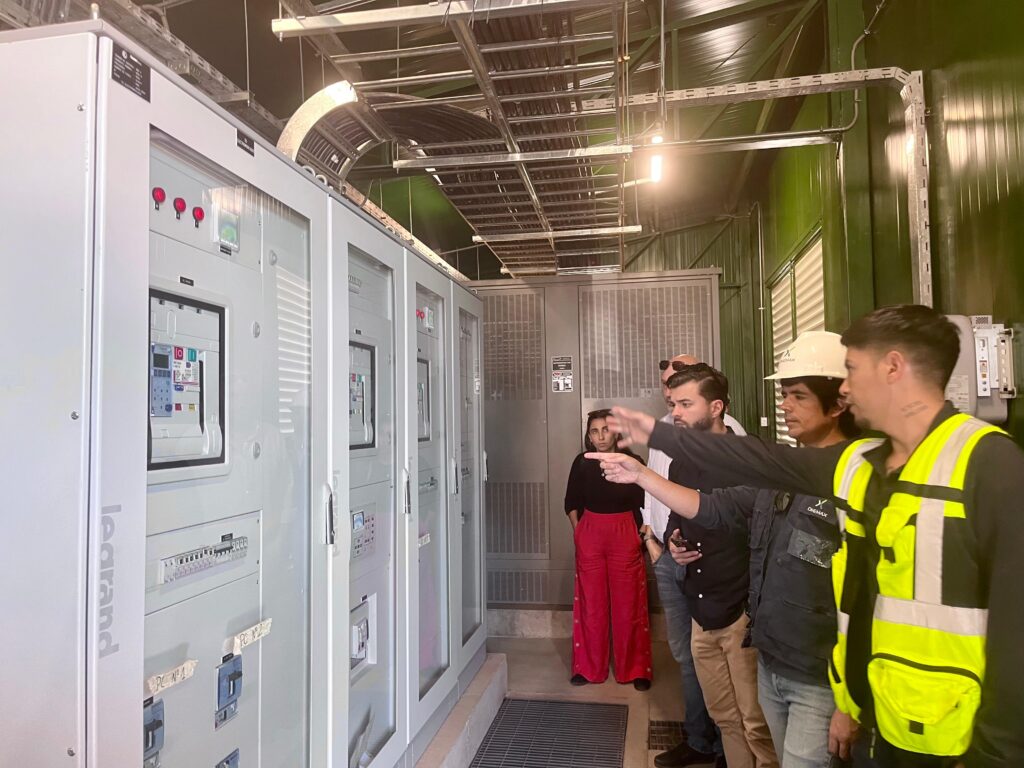
The exchange doesn’t end here. The three visiting countries identified gaps that could be closed by further knowledge exchange. Exchanging existing materials, such as private-public agreements, sharing lessons learned from tenders and relationships between public and private actors. Delegates also expressed interest in continued technical support during the early stages of implementation in their own systems. Further opportunities lie in systematising and disseminating technical knowledge generated through early deployments. Manuals, operational guidelines and training programmes could support capacity-building efforts in countries at earlier stages of their pathway to electrification. International cooperation platforms can play an important role in connecting institutions, experts and operators across the region.
The electrification of public transport in Latin America is still unfolding. Continued collaboration across countries and institutions is key to shorten learning curves and benefit from peers’ lessons learned. As decarbonisation efforts scale up, collective learning becomes an important enabler of the transition itself, supporting faster and more effective deployment of electric fleets, and contributing directly to reduce emissions from the transport sector.
The Programme “E-Motion” is funded by the Green Climate Fund (GCF), with the Corporación Andina de Fomento (CAF) serving as the accredited entity. Implementation is led by the Deutsche Gesellschaft für Internationale Zusammenarbeit (GIZ), which works closely with public and private partners to ensure the effective delivery of investments and technical assistance. Co-financing is provided by the International Climate Initiative of the German government in the context of the Mobilize Net-Zero project.
Delegations from Paraguay, Uruguay and Panama visited Chile to exchange practical knowledge on electric public transport. The visit highlighted how regional cooperation and shared experience can accelerate the transition to low-emission mobility across Latin America.
© DPTM 2026

Emma Tamez Montero
Visit profile

Nicolas Becker
nicolas.becker@giz.de
Visit profile
You are currently viewing a placeholder content from reCAPTCHA. To access the actual content, click the button below. Please note that doing so will share data with third-party providers.
More Information