This story is part of our #StoriesOfChange series, where we share how our colleagues and partners are making sustainable mobility real and changing lives along the way. Read more stories here.
How do you get more people onto metros if they can’t reach the stations easily? That is the challenge Kochi, one of India’s most congested cities, set out to address.
Despite massive investments in metro systems across India, ridership often remains below expectations. The missing link is frequently the same: first- and last-mile connectivity.
A recent survey in Bengaluru found that 95% of vehicle users would switch to public transport if better last-mile options were available (MadeForBLR, 2025). In Kochi, where commuters lose nearly 90 hours to traffic congestion each year (TomTom, 2024), the need for change was particularly urgent.
To respond, Kochi Metro Rail Limited (KMRL) launched MetroConnect, an electric feeder bus system linking metro stations with key residential and commercial areas. Funded by the French Development Agency (AFD) and supported by SUM-ACA (GIZ), the initiative officially began service in January 2025.
India has invested over US$25 billion in metro infrastructure. Yet many of these systems face low ridership, partly because people still struggle to complete the first and last leg of their journeys.
KMRL had previously operated electric feeder buses under a Gross Cost Contract (GCC) model, but the services suffered from low passenger uptake and operational inefficiencies. Electric buses also introduced new planning challenges: limited charging infrastructure, shorter driving ranges compared to diesel buses, and higher dead mileage – the distance travelled without passengers.
To overcome these constraints, KMRL made a strategic shift: instead of outsourcing operations, the organisation decided to own and operate the e-bus fleet directly. This allowed routes, schedules, and charging plans to be adapted based on real-time performance and user demand.
With technical support from SUM-ACA (GIZ), Kochi reimagined its feeder strategy from the ground up. The focus was clear: data-driven route planning, efficient battery management, and continuous monitoring.
What changed?
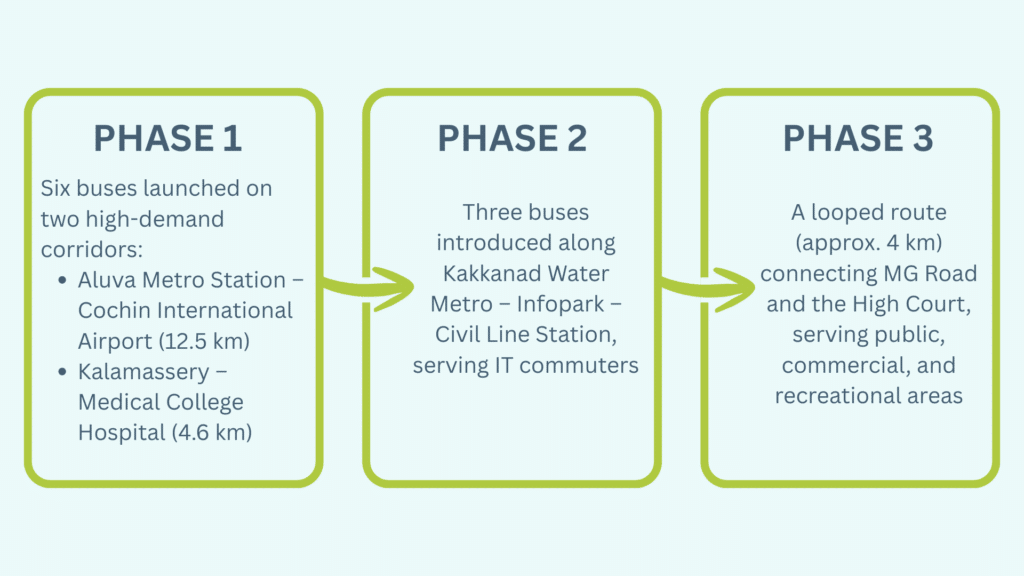
Each bus covers 150–210 km per day, with feeder services running every 10–25 minutes, depending on route demand. The toolkit enabled each bus to operate efficiently for up to 16 hours per day, balancing service frequency with charging needs. The rollout was deliberately phased to allow learning and adjustments:
For many commuters, the change meant fewer transfers, shorter waits, and a more predictable daily routine. In March 2025, a passenger feedback survey was conducted with support from SUM-ACA (GIZ). The results confirmed that MetroConnect was already influencing travel behaviour:
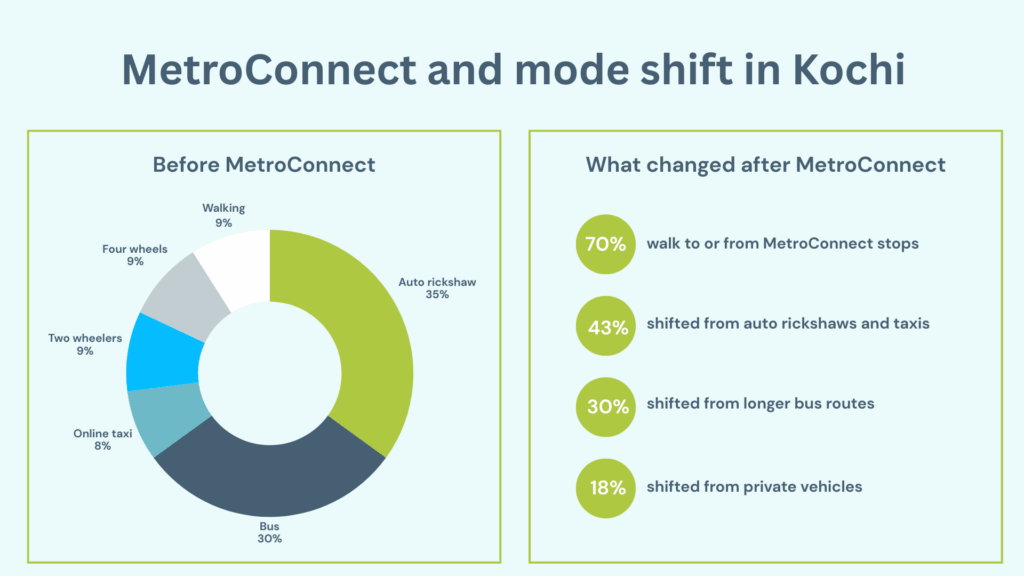
Female commuters were particularly active in the feedback process, reflecting their reliance on reliable, affordable public transport options, especially for work-related travel.
With just 15 electric buses, Kochi metro rail’s feeder bus system MetroConnect is already saving nearly 1 metric ton of CO₂ emissions every single day, equivalent to removing around 250 cars from the road daily.
Addl. GM, KMRL on 21st July 2025
As of June 2025, MetroConnect:
This operational success has also translated into higher ridership and revenue across the wider public transport system.
The urban feeder bus service is a key pillar of Kochi Metro’s integrated mobility vision. Its first-year performance shows how well-planned electric feeder systems can strengthen last-mile connectivity, increase public transport use, and support sustainable urban growth.
Loknath Behera, Managing Director, Kochi Metro Rail Limited
One year after its launch, MetroConnect has already reached scale. Since January 2025, more than 1.4 million passengers have used the feeder service, strengthening connectivity not only to Kochi Metro Rail, but also to the city’s Water Metro. Supported by seven charging stations and a dedicated depot, the system now covers around 2,300 kilometres per day, underscoring its operational reliability and growing role in Kochi’s transport network.
MetroConnect is more than a feeder service, it is a model for integrated, people-centred mobility in Indian cities. By bridging the metro stations with neighbourhoods, it brings public transport closer to everyday lives while supporting ridership growth, emission reduction and cleaner urban air. The collaboration between KMRL, AfD and GIZ demonstrates what becomes possible when data-driven planning, technical support, and institutional commitment come together.
This momentum is part of a broader shift in Kochi. In 2026, the city received an Honourable Mention from the Institute for Transportation and Development Policy (ITDP) for its pioneering Water Metro system, reinforcing its reputation as a frontrunner in integrated and sustainable urban transport.
Building on this momentum, KMRL is continuing to refine the service based on user feedback and operational data. Planned next steps include the real-time vehicle tracking, improved passenger information systems, and ongoing training programmes for feeder bus crews to strengthen safety and service quality. As more cities look to strengthen first- and last-mile connectivity, MetroConnect offers a clear lesson: even a small fleet, when strategically planned and well integrated, can deliver outsized impact.
The Sustainable Urban Mobility – Air quality, Climate action, Accessibility (SUM-ACA) project is funded by the German Federal Ministry for Economic Cooperation and Development (BMZ) and implemented by Deutsche Gesellschaft für Internationale Zusammenarbeit (GIZ) GmbH.
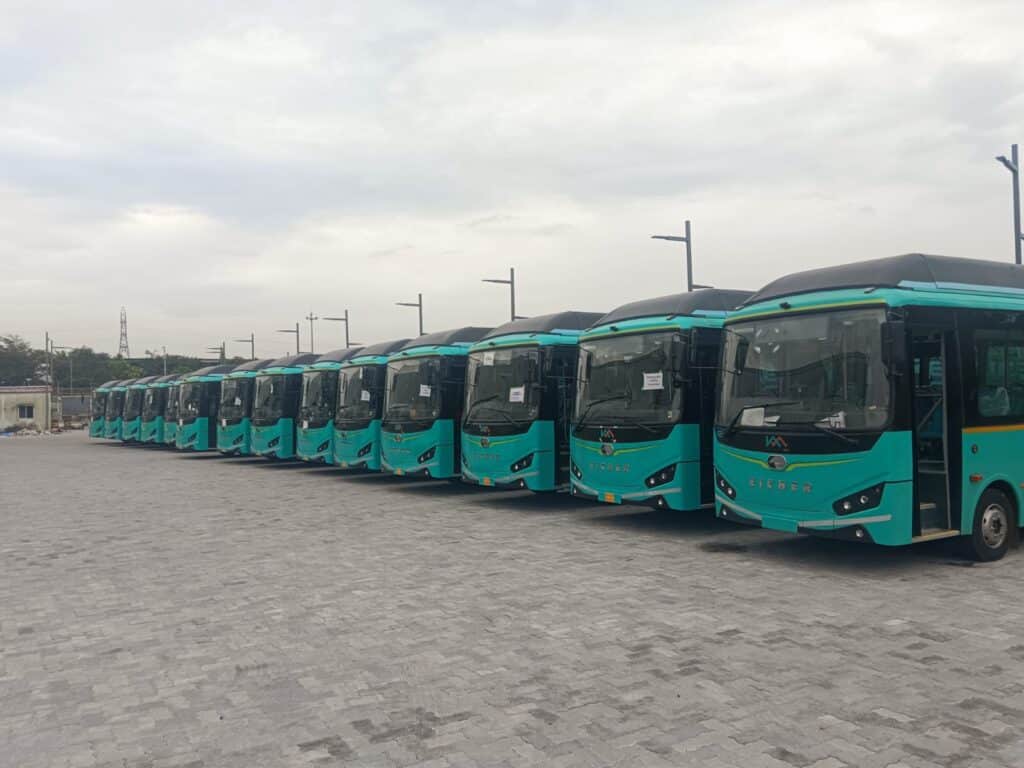
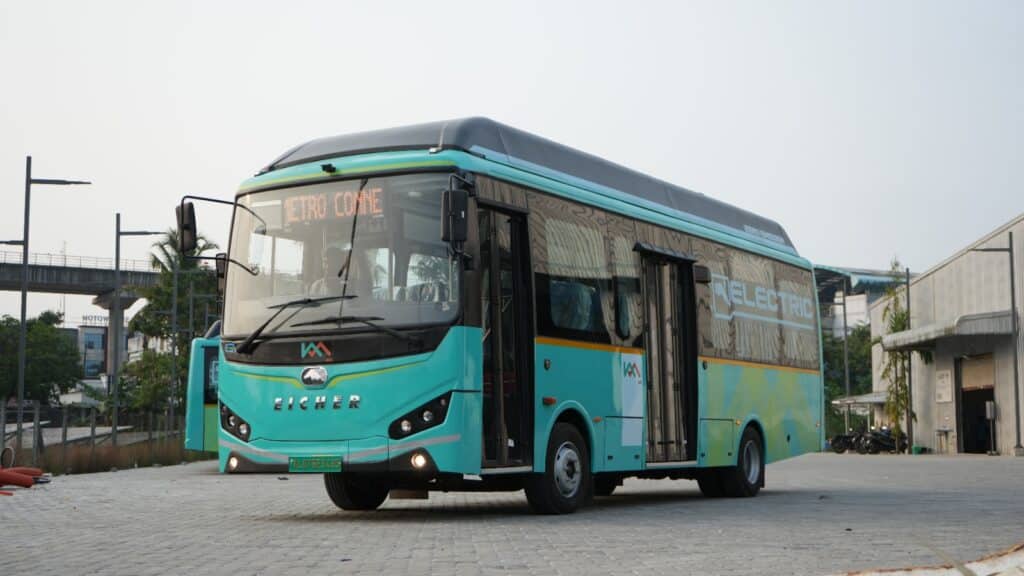
The MetroConnect electric feeder bus fleet in Kochi, supporting seamless first- and last-mile access to the metro network. / © GIZ India
Shirish Mahendru
shirish.mahendru@giz.de
Visit profile
You are currently viewing a placeholder content from reCAPTCHA. To access the actual content, click the button below. Please note that doing so will share data with third-party providers.
More Information