
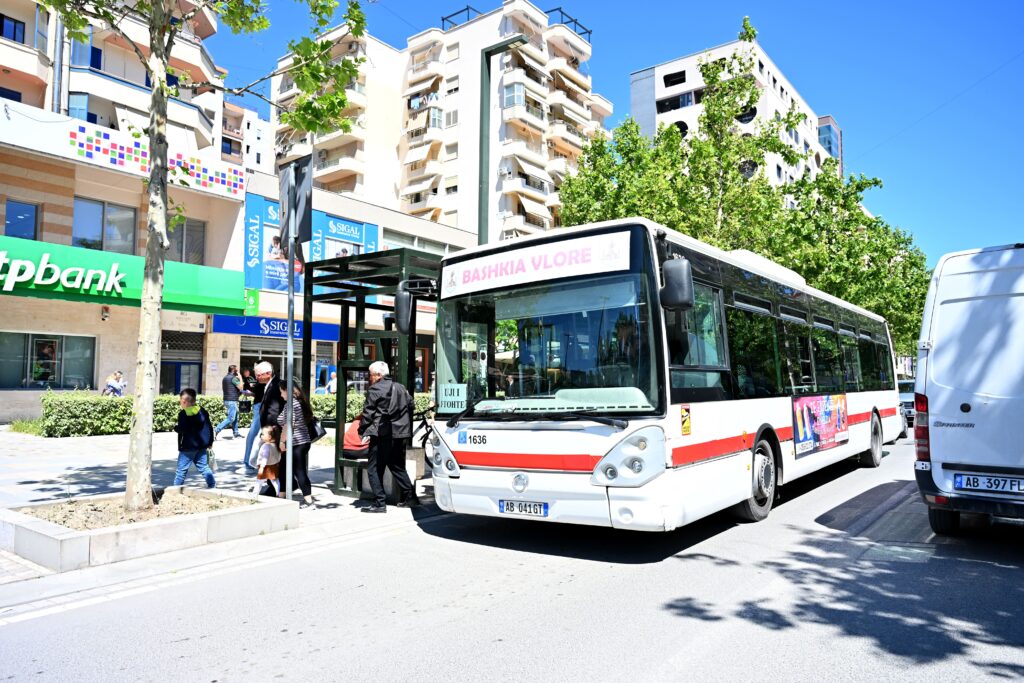
As one of Albania’s fastest-growing coastal cities, Vlorë faces mounting pressure from rising temperatures, rapid urban development and seasonal tourism. Public transport accounts for less than 20 per cent of daily trips, with private cars still dominating the roads. Making public transport more comfortable, accessible and attractive is key to easing congestion and building a healthier urban environment — which is exactly the challenge two young architects decided to take on.
For Albanian architecture students Arbër Xhomaqi and Margarita Kërkeshi, what began as an idea has become part of everyday life in Vlorë. Their Urban Oasis concept was selected for implementation and is transforming the experience of waiting for public transport by making bus stops more accessible, inclusive and climate-responsive. On International Youth Day, their story shows what becomes possible when young people are given the chance to develop solutions to real urban challenges and see them built.
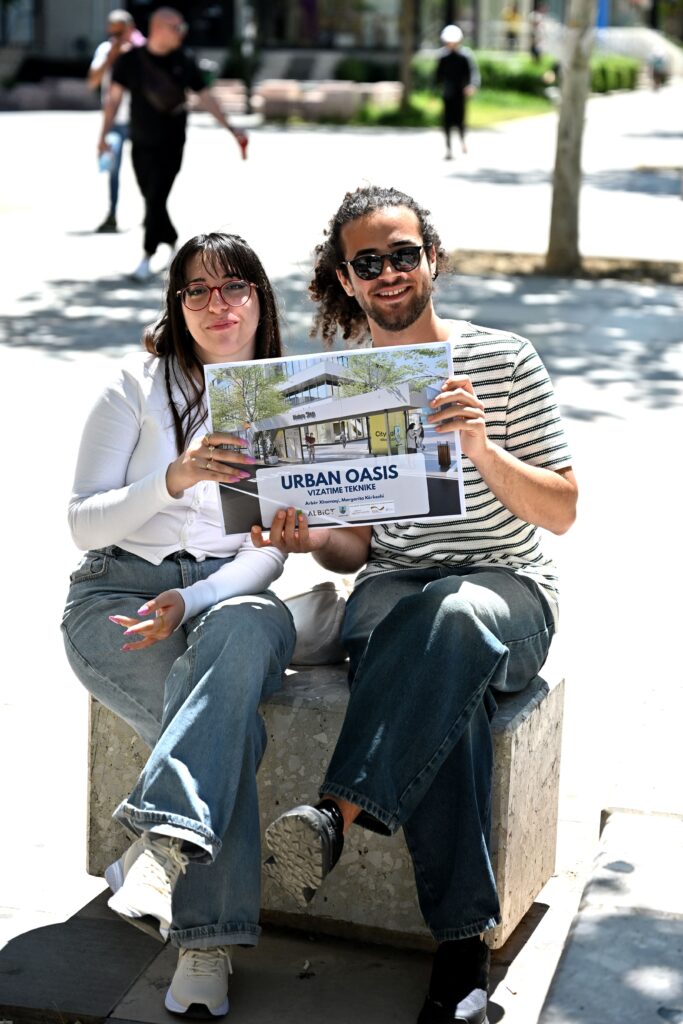
The concept took shape during the CliMobility City Lab, where young professionals worked alongside experts and local institutions on climate-responsive urban mobility solutions. Arbër and Margarita’s design reimagined bus stops by extending the roof for shade, adding side panels for protection from wind and rain, improving accessibility through barrier-free design, and integrating a green wall as a nature-based solution to reduce heat. By upgrading existing structures rather than rebuilding them, the concept also reduced its environmental footprint.
It really means a lot to us that the youth-led project got approved and accepted. It shows that youthful projects are not only creative, but also feasible, and that our voices matter. We can impact the lifestyle that we have and the quality of our urban spaces.
Arbër Xhomaqi
For Margarita, the inspiration came from watching how people experienced Vlorë’s bus stops during increasingly hot summers. Existing shelters offered little protection from the heat, prompting the team to rethink how these everyday public spaces could work better for everyone.
“The idea came very simply by observing the existing bus stops. We felt we could redesign them because the structure wasn’t functional during hot summers. We thought, let’s do something different so it’s more comfortable for citizens while they wait for the bus,” explains Kërkeshi.
In partnership with the Municipality of Vlorë, four bus stops along Ismail Qemali Boulevard are being renovated based on the students’ design. The pilot’s success has already encouraged the municipality to commit to renovating four additional stops using the same design, extending the benefits to more residents across the city.
The involvement of young people is something new for the Municipality of Vlorë, and young people have the most advanced ideas.
Orges Deraj, Architect and Urban Planner, Municipality of Vlorë
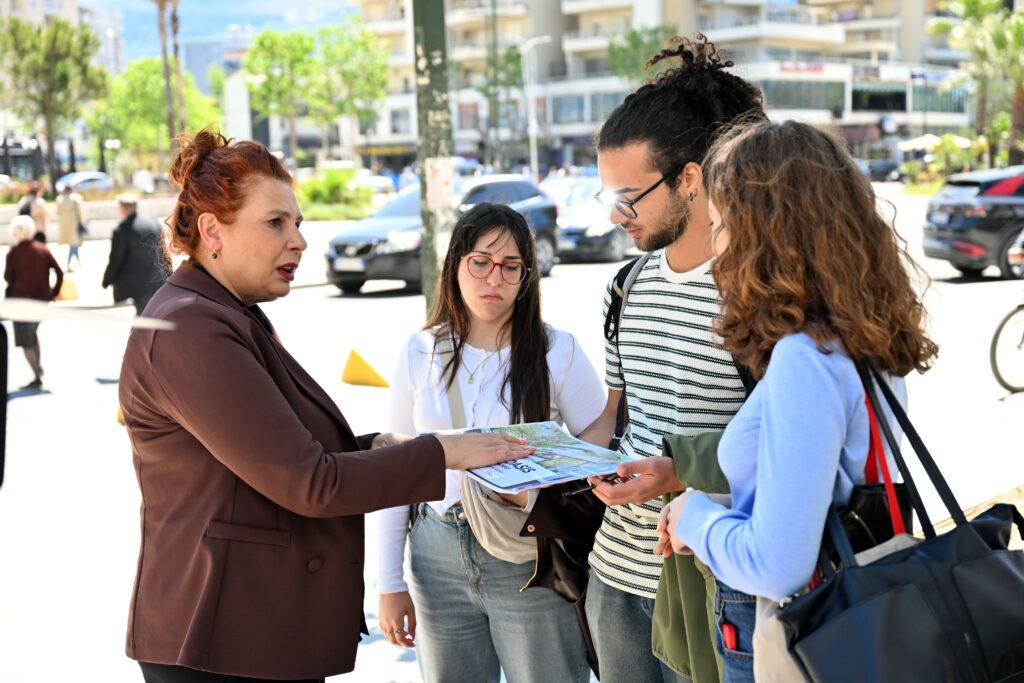
For Rexhina Basha, GIZ Advisor, one of the most valuable parts of the process was creating an open space where young people could work alongside experts and local institutions to develop ideas with real potential for implementation.
“Giving young people the opportunity to contribute is the best we can do. They have very innovative ideas, they work hard, and it’s important to be inclusive and bring everyone to the table so we can learn from each other while giving a fair opportunity to those with the best ideas,” explains Basha.
The Vlorë experience shows how local innovation can feed into broader climate adaptation efforts. By connecting municipalities, technical expertise and young innovators, the initiative is turning concepts into practical solutions, and generating knowledge that can inform similar projects across the Western Balkans.
This International Youth Day, Arbër Xhomaqi and Margarita Kërkeshi’s story is a reminder that young people are not only imagining more resilient cities: they are already building them. With the right support, mentorship and opportunities, their ideas can strengthen communities and help cities adapt to a changing climate.
The project ”Green Agenda: Climate Change Adaptation in the Western Balkans” is commissioned by the German Federal Ministry for Economic Cooperation and Development (BMZ) and implemented by Deutsche Gesellschaft für Internationale Zusammenarbeit (GIZ) GmbH in partnership with the Regional Cooperation Council together with Transport Community, NALAS, and ODRAZ as Techical Secretariat of the CIVINET Slovenia–Croatia–South East Europe network.
A more comfortable and accessible public transport system will improve the urban environment. © GIZ

Mila Jovanovska
mila.jovanovska@giz.de
Visit profile
You are currently viewing a placeholder content from reCAPTCHA. To access the actual content, click the button below. Please note that doing so will share data with third-party providers.
More Information