
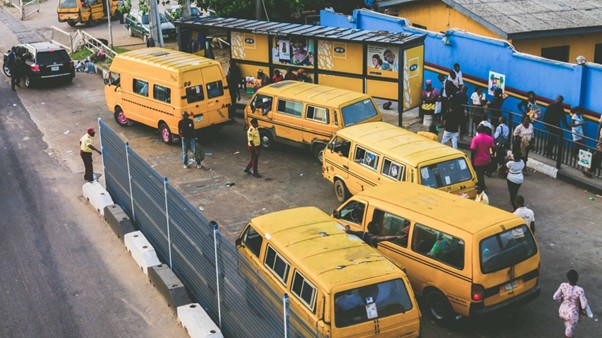
For the millions of Africans who rely on informal paratransit networks everyday fuel price volatility is not an abstract economic phenomenon. The 2026 energy crisis, triggered by the closure of the Strait of Hormuz and the resulting 53% surge in global crude oil prices, made the vulnerability impossible to ignore. But the crisis is not an anomaly. As long as African urban mobility depends on imported fossil fuel, geopolitical shocks, supply disruptions, and price spikes will continue to put the continent’s transport system at risk. The question is no longer whether to transition, but rather how quickly it can happen.
Across Sub-Saharan Africa, urban mobility is defined not by state-run light rail or municipal bus routes, but by a sprawling, network of privately owned, informal transport known as paratransit or popular transport. Whether it is the Danfo or Okada in Nigeria, Matatus in Nairobi, Boda-bodas in Kampala, Trotos in Accra, or Khombis in Johannesburg, these modes dominate public transport, accounting between 40% to 98% of daily trips depending on the city.
The Strait of Hormuz, through which an estimated 20 million barrels per day (mb/d) of crude oil and oil products were shipped in 2025, is one of the world’s most critical oil transit chokepoints. When its closure triggered a price surge from roughly $67 to over $102.9 per barrel between February and March 2026, the effects reached the African pump prices almost immediately.
For paratransit operators running on marginal profits without government subsidies, the effect is catastrophic. Fuel typically accounts for a significant share of daily operating costs, and when prices jump by 30% or more, daily profits are often completely erased. Due to the informal nature of the sector, drivers have no buffer to absorb these price shocks, leaving them without a choice but to pass higher costs to commuters. In extreme cases, the inability to break even can led to most of private (mini)-buses being withdrawn from service, as the cost of fuel simply exceeded the revenue generated from standard fares.
While Africa possesses significant crude oil reserves, it remains heavily dependent on imported refined fuels. South Africa, for example, imports 57% of its diesel from Oman, the UAE and Bahrain. This structural dependence means that every geopolitical disruption in a distant region lands directly on the daily commute of an office worker in Lagos or a market trader in Kampala.
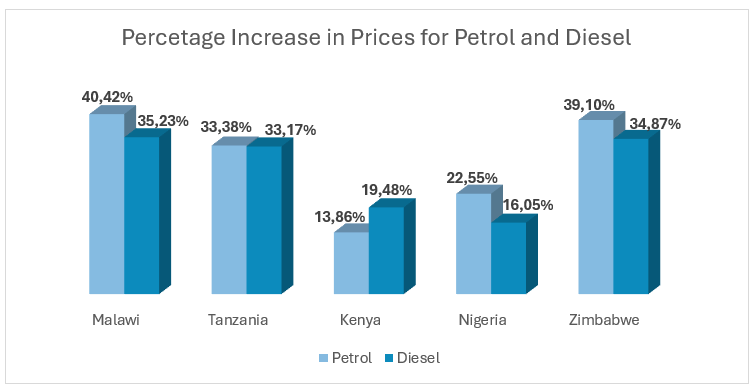
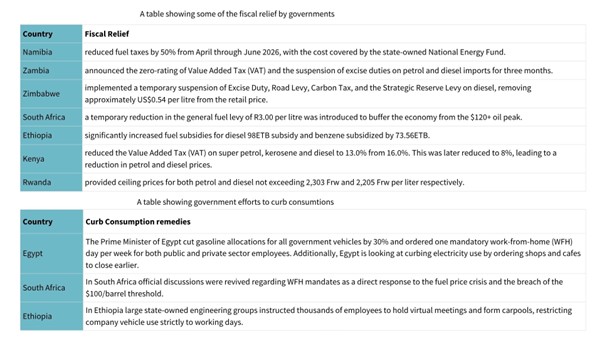
As the 2026 global energy crisis destabilised energy markets, African governments deployed emergency measures ranging from tax cuts on fuel to consumption rationing in order to prevent a total collapse of urban mobility. These responses helped contain the immediate damage, but they do not address the underlying structural vulnerability.
The 2026 crisis is a warning, not a one-off event. Decoupling urban mobility from the internal combustion engine is no longer a policy aspiration, but an eminent prerequisite for regional stability. Rather than continuing to channel investment into fuel infrastructure that remains exposed to external geopolitical disruptions, the path forward lies in a strategic pivot toward renewable energy and electric mobility.
For Sub-Saharan Africa, the opportunity is significant. The continent’s vast renewable energy potential means that powering transport via domestic green grids could meaningfully reduce dependence on foreign currency-draining fuel imports. Research suggests that switching to electric vehicles in this context can reduce operating costs by up to $0.15 per kilometre, translating to annual savings of up to $3,900 per vehicle for paratransit operators who currently have no margin to spare.
Realising this potential requires investment models built for the informal sector, not transplanted from high-income countries. Standard highway charging infrastructure is not the answer. What works in Sub-Saharan Africa looks different and proof of concept already exists.
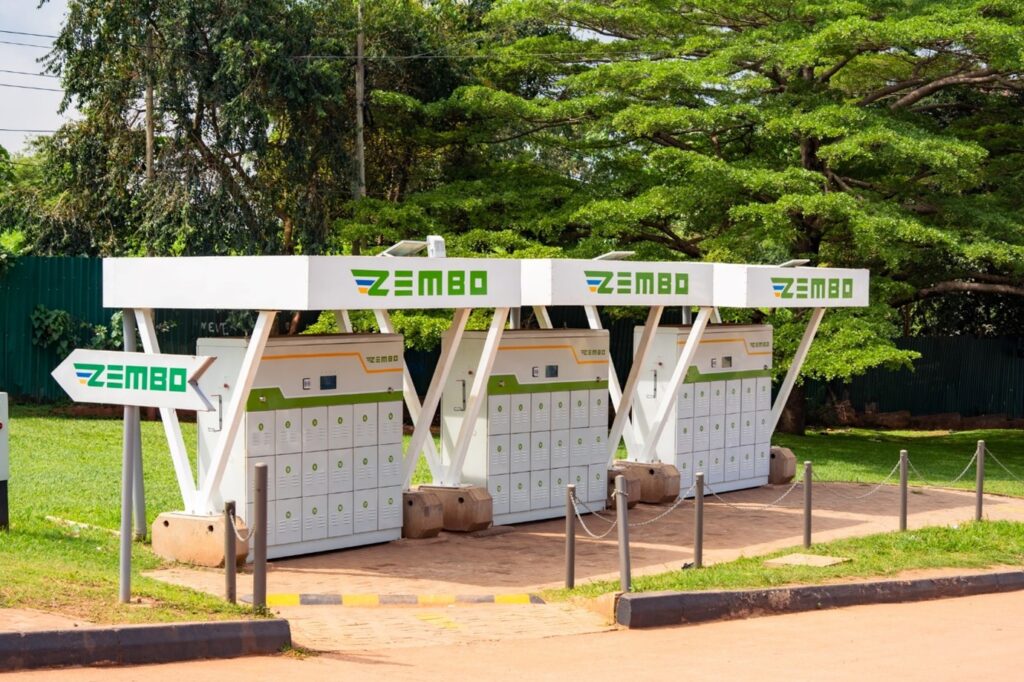
In Uganda, Zembo has demonstrated the viability of battery-swapping networks for motorcycle taxis (Boda-bodas), removing the upfront cost barrier that makes electric vehicles inaccessible for most informal operators. In Kenya, BasiGo is successfully electrifying informal minibus (matatu) networks through “Pay-As-You-Drive” financing models that mirror the cash-flow realities of paratransit operators.
At the policy level, GIZ and partners including VREF, MobiliseYourCity, and TUMI have been facilitating regional exchange between practitioners from Ghana, Uganda, Nigeria, Kenya, South Africa, Tanzania, and Ethiopia on how to move minibus electrification from discussion to implementation.
Through the Mobilize Net-Zero project, GIZ is already working with governments on aligning national transport policies with climate goals and improving access to finance for paratransit reform. Read more: 2026_National_Roadmap_for_Paratransit_Reform_interactive.pdf
These operational blueprints provide the critical proof-of-concept necessary to scale sustainable mobility across the continent.
Rethinking Transport is a GIZ self-financed initiative, implemented by GIZ and Agora Verkehrswende.
A bus stop in Lagos State Nigeri, Source: Adventure.com

Byencit Duncan
byencitduncan@gmail.com
You are currently viewing a placeholder content from reCAPTCHA. To access the actual content, click the button below. Please note that doing so will share data with third-party providers.
More Information