
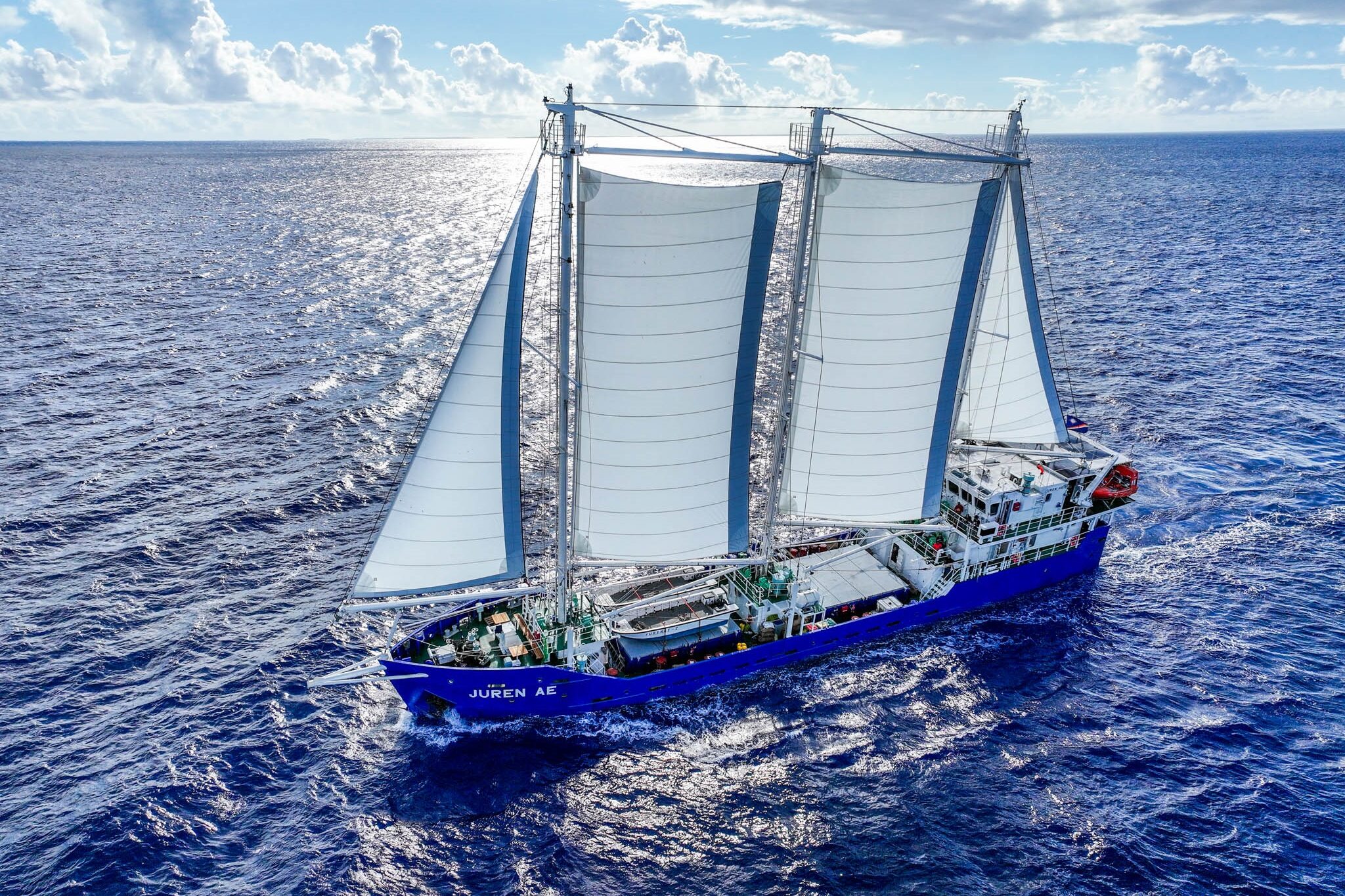
Almost nine years of German-Marshallese cooperation through the Low Carbon Sea Transport (LCST) project have turned an ambitious idea into practical experience: from maritime data and policy development to Marshallese-built low-emission craft, maritime training and a new generation of wind-assisted inter-island shipping.
For the Republic of the Marshall Islands, maritime transport is essential. With communities spread across widely dispersed islands and more than two million square kilometres of ocean, vessels provide vital connections to people, goods, services and economic opportunities. Since 2017, Germany and the Marshall Islands have worked together through LCST to explore ways of maintaining this connectivity while reducing dependence on fossil fuels.
Commissioned by the German Government through the International Climate Initiative (IKI), LCST has approached maritime decarbonisation as more than a technology challenge. The project has combined transport and emissions data, the development of the national Maritime Transport Roadmap, low-emission inside-lagoon craft developed with Waan Aelõñ in Majel, maritime education and training, institutional and policy support, and the development and operation of wind-assisted vessels including Juren Ae. Together, these activities have generated practical lessons about what maritime transition requires under real Pacific conditions.
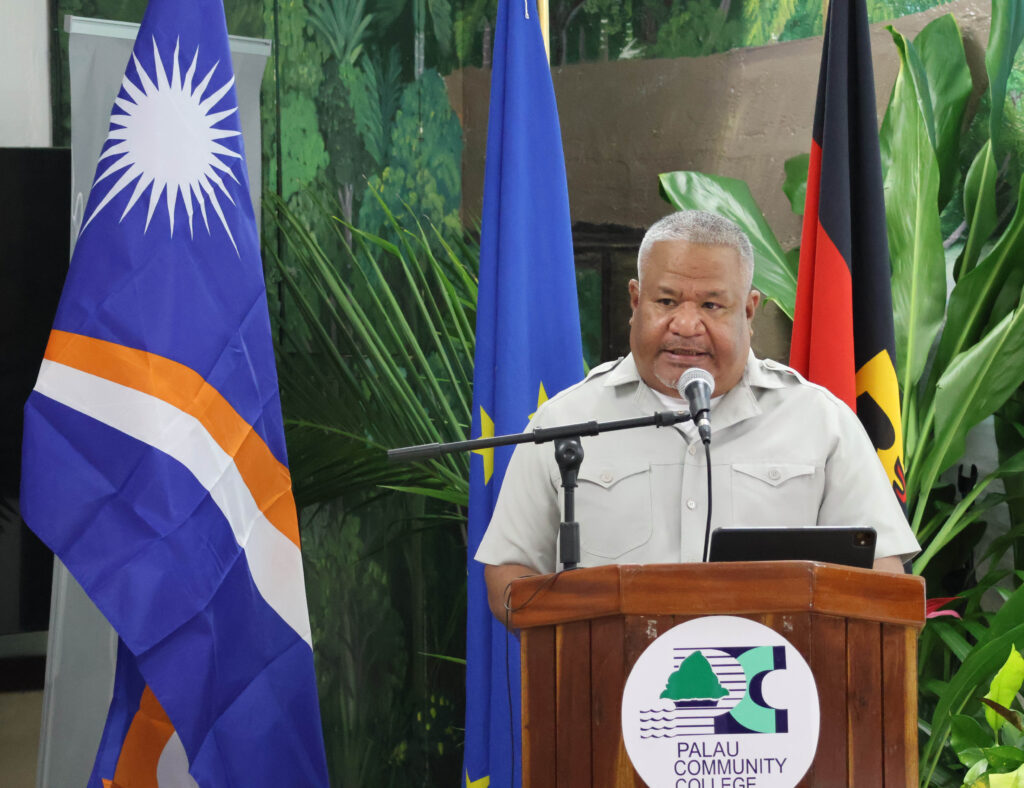
These broader lessons of the LCST project were highlighted during a German-hosted side event in Palau, bringing together Parliamentary State Secretary Bettina Hagedorn, Marshall Islands Minister for Transportation, Communication and Information Technology Hilton Kendall, Presidential Special Envoy for Maritime Decarbonisation Albon Ishoda, German Ambassador Dr Andreas Pfaffernoschke, and Pacific and international partners.
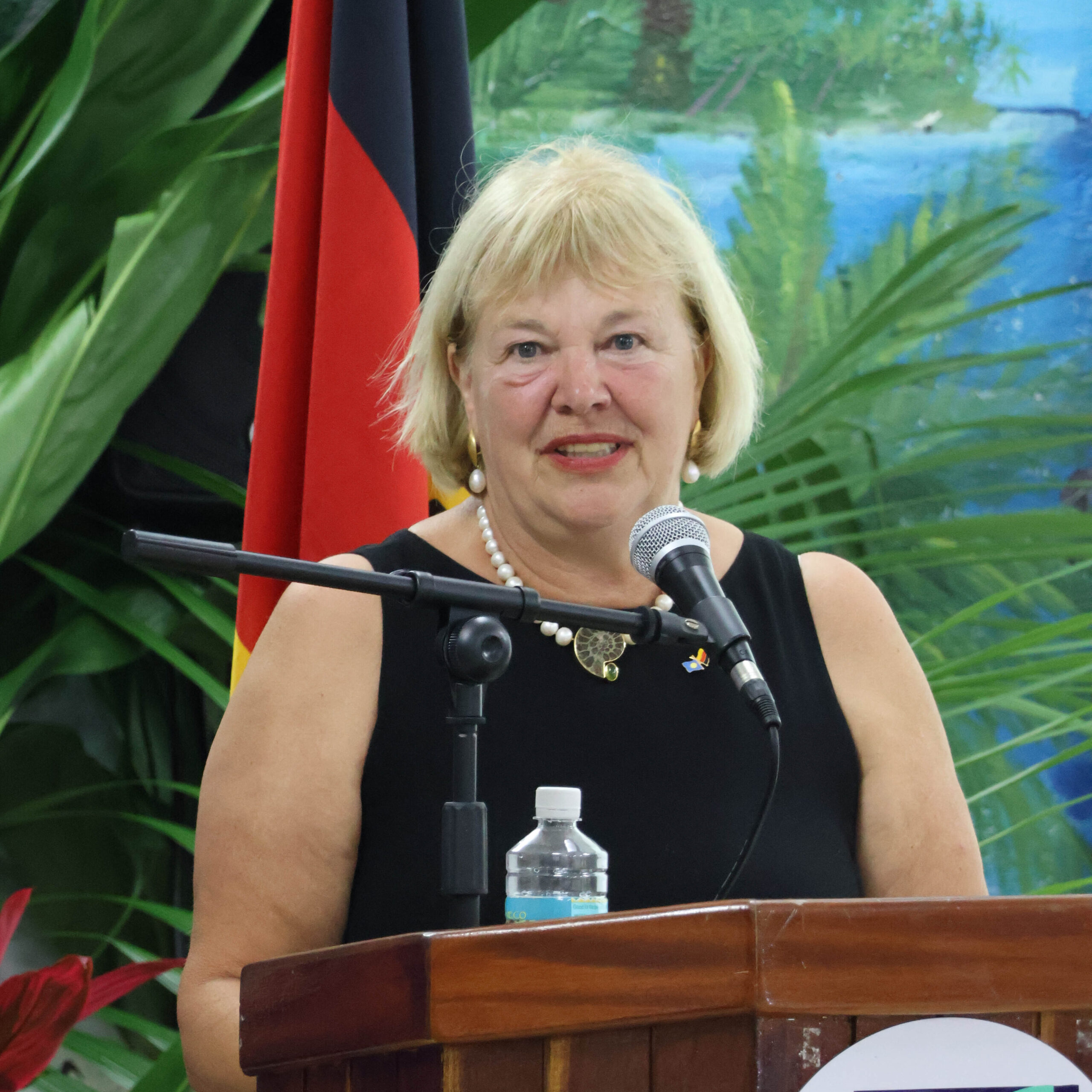
Bettina Hagedorn, Parliamentary State Secretary at the German Federal Environment Ministry ©Michael Spis Gordon
A central message from the discussion was that maritime transformation cannot be achieved through technology alone. Vessels must be matched by local skills, maintenance capacity, institutions, policy, financing and long-term ownership. LCST has tested these different dimensions together, generating successes as well as practical lessons that can inform the next generation of low-carbon maritime investments.
At the 55th Pacific Islands Forum Leaders Meeting in Koror, Palau, the discussion moved deliberately from national experience to regional scale. At a separate Pacific-led Pacific Blue Shipping Partnership (PBSP) Donor Forum, Pacific governments, the Green Climate Fund, development partners and international stakeholders discussed how lessons generated through initiatives such as LCST can inform a coordinated regional transition.
GCF Executive Director Mafalda Duarte welcomed this direction, emphasising that the initiative represents not only maritime decarbonisation but also an opportunity for economic development and regional integration. Transforming the sector will require coordinated action, substantial climate finance and collaboration among Pacific countries, development partners and international institutions.
For the Marshall Islands, the connection between the two discussions is clear. LCST and the Juren Ae provide practical evidence of what a low-carbon maritime transition requires, while PBSP considers how such experiences can contribute to a coordinated Pacific approach. The ambition extends beyond individual vessels to cleaner domestic fleets, resilient maritime infrastructure, strengthened maritime capacity and more resilient island communities.
The connection between LCST and PBSP is therefore not about replicating Juren Ae vessel-for-vessel. It is about scaling the process of learning: understanding transport needs first, developing solutions suited to Pacific operating conditions, strengthening people and institutions alongside technology, and using practical experience to improve each successive investment.
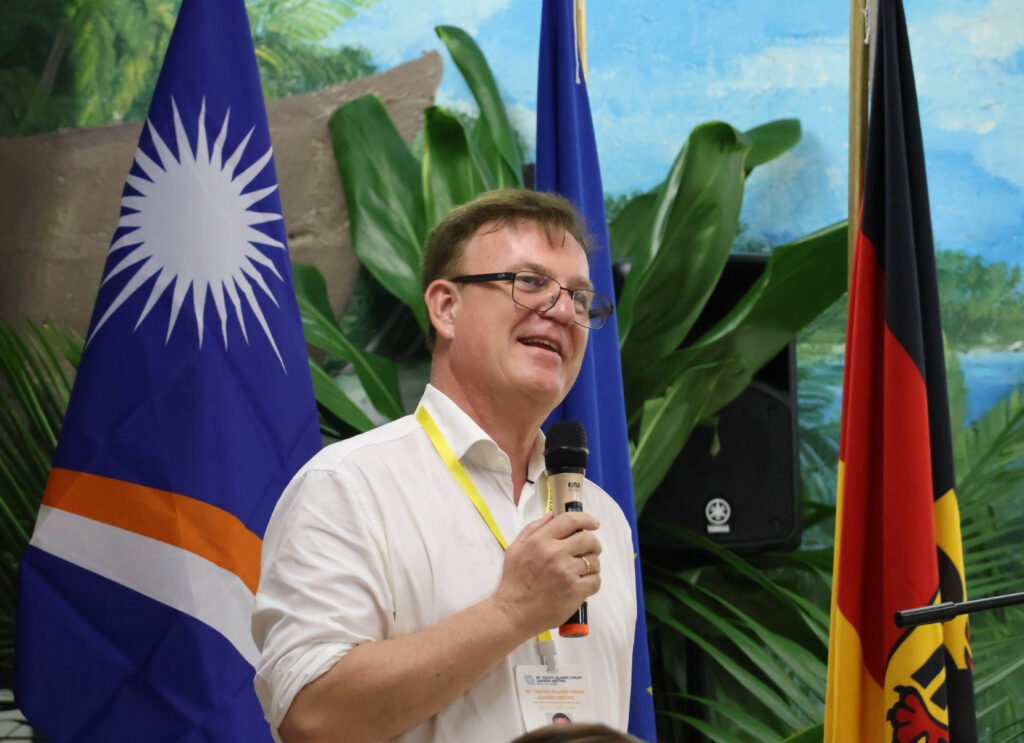
Immanuel Gebhardt, GIZ Country Director for the Philippines and Pacific Islands ©Michael Spis Gordon
As LCST enters its final phase, this may be its most important legacy. Nearly a decade of German-Marshallese cooperation has generated knowledge, institutions, skills and practical experience that extend beyond an individual project or vessel. The next chapter is increasingly Pacific-led, with initiatives such as PBSP creating an opportunity to translate those lessons into cleaner, more resilient and better-connected maritime transport across the region.
The Low Carbon Sea Transport (LCST) project is commissioned by the German Federal Ministry for the Environment, Climate Action, Nature Conservation and Nuclear Safety (BMUKN) through the International Climate Initiative (IKI) and implemented by Deutsche Gesellschaft für Internationale Zusammenarbeit (GIZ) GmbH in partnership with the Republic of the Marshall Islands and regional and international stakeholders.
Hon. Hilton Kendall, Minister for Transportation, Communication and Information Technology, Republic of the Marshall Islands © Michael Spis Gordon
Francesca Comba
francesca.comba@giz.de
Visit profile

Geovannie Johnson
geovannie.johnson@giz.de
Visit profile
You are currently viewing a placeholder content from reCAPTCHA. To access the actual content, click the button below. Please note that doing so will share data with third-party providers.
More Information