
This story is part of our #StoriesOfChange series, where we share how our colleagues and partners are making sustainable mobility real and changing lives along the way. Read more stories here.
Sometimes that networking event seems minor, but it is powerful […]. Really try to look left and right try to connect try to really build friendships build connection because we need each other to still make a difference.
– Insa Illgen, Project Director of Thai German Cooperation on Energy, Mobility and Climate (TGC-EMC)
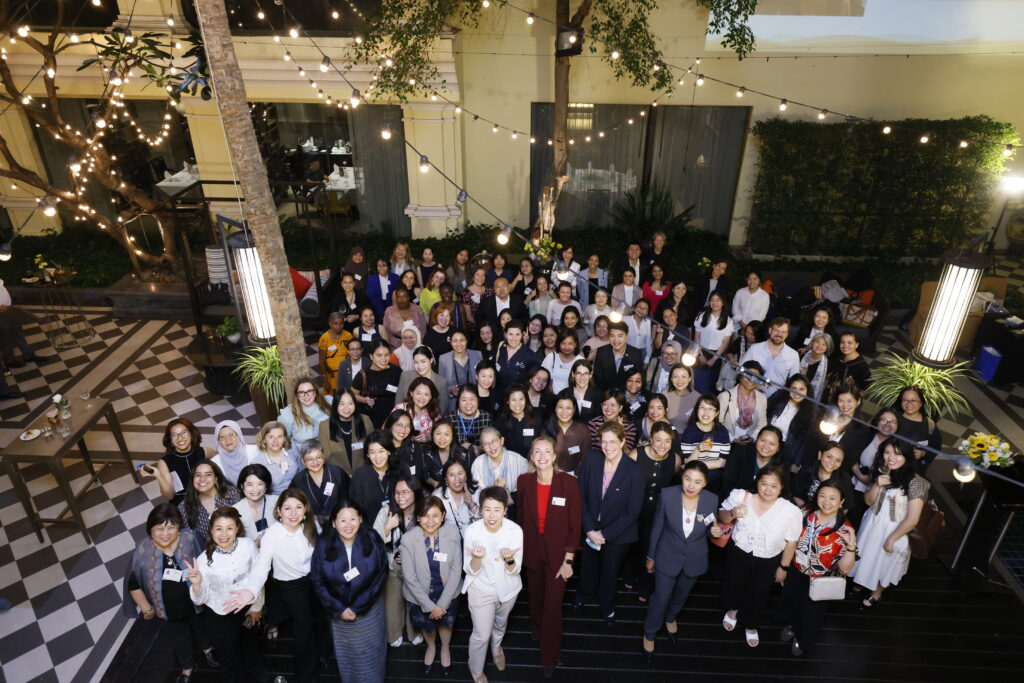
On 12 March 2026, while Bangkok hosted the Better Air Quality Conference, a room filled with over 100 women from across Asia was already living those words. There were policymakers, engineers, researchers, and advocates, each navigating their own challenges in the energy and transport sectors, and each carrying a shared determination to drive change. Together, GIZ Thailand and UN Environment Programme had created this space with a clear purpose: to bring women in transport and energy together not just to network, but to connect, reflect, and lead.
Behind every transition, whether toward cleaner transport systems or sustainable energy, there are people navigating barriers that are often invisible. Women in these sectors continue to face structural challenges: underrepresentation in leadership, limited access to networks, and fewer opportunities to shape the decisions that will define the future of cities and climate. Not because they lack the expertise or the drive, but because the spaces where those decisions are made have not always been built with them in mind.
That evening in Bangkok was a deliberate step toward changing that.
Across Asia, the energy and transport sectors are undergoing rapid transformation.
Governments are setting ambitious climate targets, cities are rethinking mobility systems, and investments in clean technologies are accelerating. Yet, despite this progress, the transition is not equally inclusive. Women remain significantly underrepresented in technical, managerial, and decision-making roles in both sectors. This gap is not just about fairness; it directly affects the quality and sustainability of the solutions being developed. When diverse perspectives are missing, policies risk overlooking the needs of entire communities.
For many women working in these fields, the challenges are both professional and personal. Limited mentorship opportunities, lack of visibility, and restricted access to influential networks can make career progression more difficult. In some cases, women are the only female voice in the room, expected to contribute, but not always heard.
Without inclusive participation, innovation is constrained, policies lose social relevance, and climate solutions risk falling short of the people they are meant to serve. At a time when countries are racing to meet their climate commitments, the urgency is clear: a transition that excludes is a transition that falls short.
For GIZ Thailand and the UN Environment Programme, the answer began with intention: creating a space where women are not positioned as participants on the sidelines, but as active contributors shaping the conversation.
“Women Driving Change in the Transport and Energy Sectors” was designed with this purpose at its core. Held in Bangkok alongside the Better Air Quality Conference 2026, the event brought together over 100 participants from 19 countries across Asia, not just to network, but to exchange, challenge, and co-create ideas.
The session emphasised dialogue and agency: inspirational spotlight sessions where women leaders shared personal journeys and leadership lessons; guided conversations using “connection cards”, designed to spark meaningful exchanges and uncover shared challenges; and open networking spaces, allowing participants to build relationships and explore collaboration opportunities organically.
The space allowed for honest reflection on barriers, and more importantly, strategies to overcome them. By bringing together diverse voices, from policymakers and government officials to engineers, researchers, and entrepreneurs, the event created an environment where leadership was practised in real time. Women were not only speaking; they were connecting ideas, building alliances, and identifying opportunities to collaborate across borders. It became a platform for empowerment, where women could see themselves not just as contributors to the transition, but as leaders driving it forward.
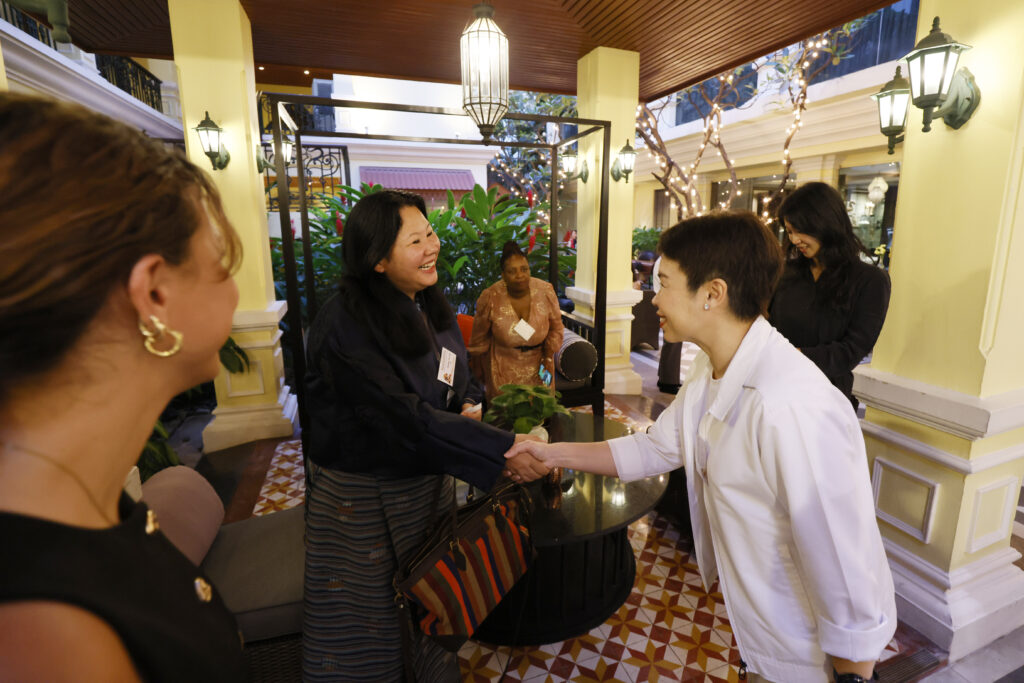
By the time the evening ended, something had already begun. Participants left with more than new contacts: they left with a renewed sense of confidence and purpose. The connections formed that evening are already opening doors to future collaboration, across countries, institutions, and sectors.
Across 19 countries, women returned home carrying shared experiences: technical perspectives enriched by personal ones, and personal ones validated by the technical. New pathways for regional cooperation are forming, quietly and organically, in the way that meaningful collaboration often does.
More importantly, the event reinforced a message that extended well beyond Bangkok: inclusion is not an add-on to climate action, it is a prerequisite for its success. When women are supported to lead, influence, and innovate, the systems they help shape become more resilient, more equitable, and more effective, not as a side effect, but by design.

Creating space for women to connect is a powerful first step. But enabling them to lead is what drives lasting change. Sometimes, transformation does not begin with large-scale reforms or complex policies. It begins with something simpler: ensuring that women are able to participate meaningfully in shaping the green transition and the future of sustainable energy and mobility.
The project “Thailand–Germany Cooperation on Energy, Mobility and Climate (TGC EMC)” supports Thailand’s transition toward carbon neutrality by 2050 by advancing renewable energy expansion, sector coupling, and low-carbon transformation across the energy, transport, and industry sectors. The project strengthens policy frameworks, technical capacity, and climate finance mechanisms to enable integrated and scalable decarbonisation solutions. It is funded by the International Climate Initiative (IKI) of the German Federal Ministry for the Environment, Climate Action, Nature Conservation and Nuclear Safety (BMUKN).
You are currently viewing a placeholder content from reCAPTCHA. To access the actual content, click the button below. Please note that doing so will share data with third-party providers.
More Information