Freight transport keeps African economies moving. As trade expands, cities grow, and industries develop, the volume of goods being transported across the continent is rising fast. Yet most of this movement on the continent still takes place on the road: around 80% of freight is carried by trucks, often over long distances along already congested corridors.
This comes with clear downsides. Heavy-duty vehicles are a major source of emissions and air pollution, and they put significant pressure on road infrastructure. At the same time, logistics costs remain high in many African countries, often due to inefficiencies in operations, slow border processes, and limited multimodal integration. The continent’s freight systems are also becoming increasingly vulnerable to climate risks, which are already disrupting key transport corridors, affecting reliability and increasing costs across supply chains.
As the demand for freight is expected to increase, these challenges will only become more pressing. Therefore, improving freight systems needs to focus not only on reducing emissions and improving infrastructure resilience, but also on making trade more efficient, supply chains reliable, and economies more competitive.
Addressing these shared challenges across the continent requires more strategic infrastructure planning, stronger coordination between institutions, and closer collaboration between public and private actors across African countries.
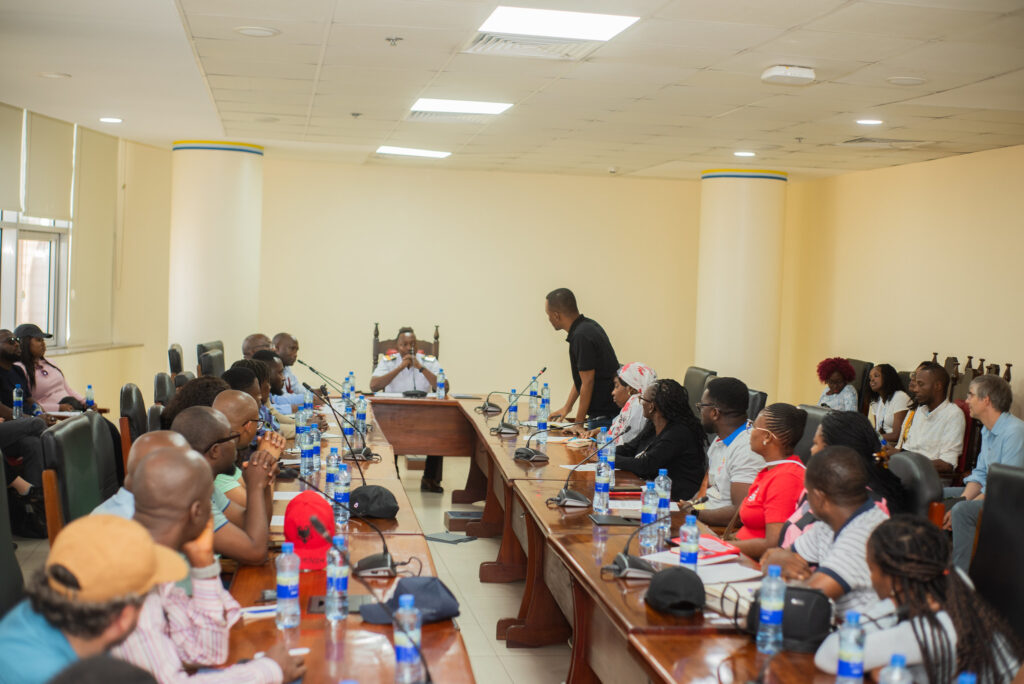
This served as the foundation for the Rethinking Transport Lab on Green Logistics, which convened 24 participants from 12 African countries in Dar es Salaam, Tanzania, from 9 to13 February 2026. Organised by GIZ and Agora Verkehrswende in partnership with the Kuehne Climate Center, the Lab addressed the seemingly simple yet complex question: How can freight systems in Africa become cleaner without hindering economic growth?
Over the five days, participants explored this question from different angles — policy, infrastructure, operations, and business models, while working towards practical and context-specific solutions.
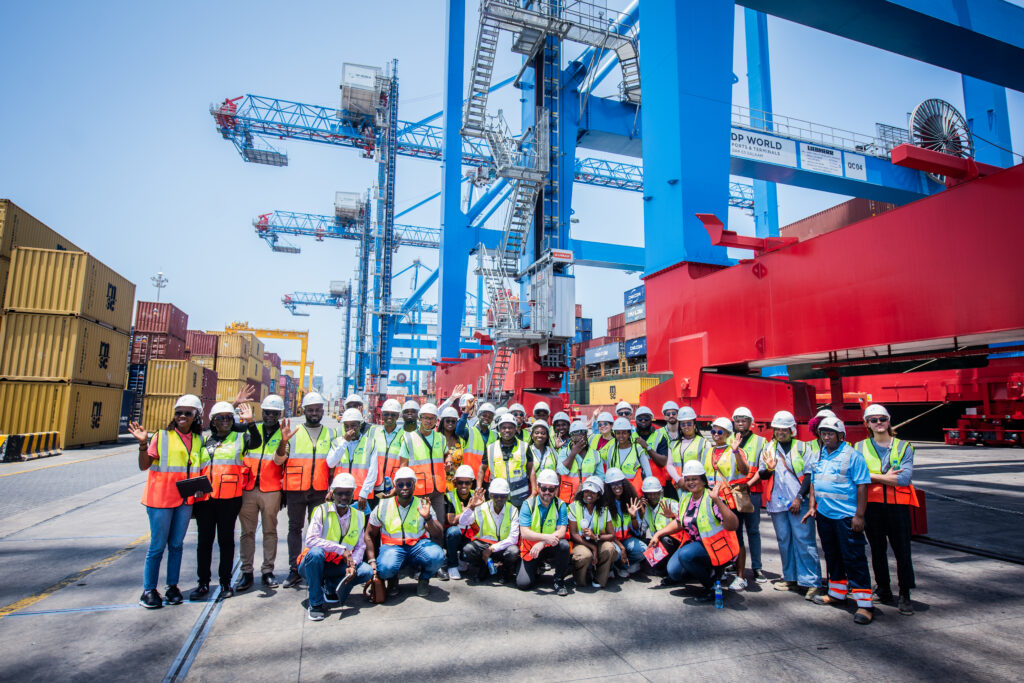
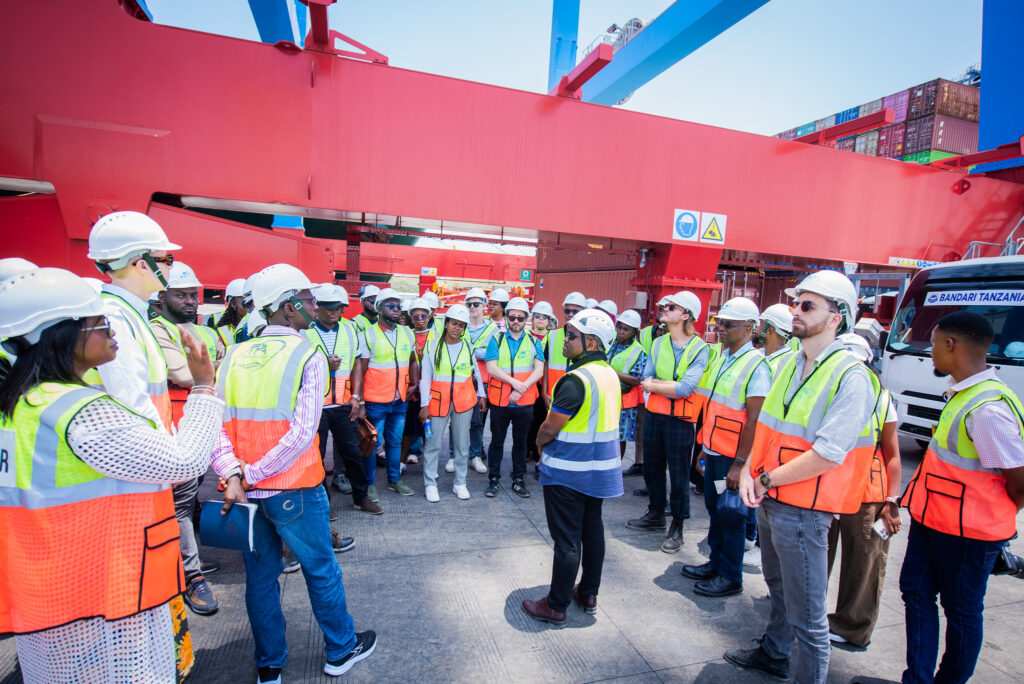
A key part of the Lab involved venturing beyond the workshop room and into real logistics environments. At the Port of Dar es Salaam, participants witnessed first-hand the central role that the port plays in regional trade. As well as serving Tanzania, it also serves the landlockedcountries of Rwanda, Burundi and eastern part of the Democratic Republic of the Congo, along the Central Corridor. The scale of the port’s operations, and the complexity of coordinating the various transport modes were immediately apparent.
Observing how goods move through the port system raised concrete questions: Where do delays occur? How can operations become more efficient? And how can emissions be reduced without disrupting efficiency in such a high-throughput environment?
A second visit led to a freight station along the Standard Gauge Railway (SGR), where cement is loaded for inland transport. Compared to road transport, rail offers efficiency and reduced emissions advantages for long-distance freight. The visit also highlighted the practical challenges of scaling rail freight and integrating it with existing logistics chains.
Together, the site visits grounded the discussions. They made it easier to connect big-picture ideas with the realities of infrastructure, operations, and decision-making on the ground.
The Lab was designed as a co-working space, where the participants spent most of their time working in small, interdisciplinary teams to develop concrete ideas. The following five solutions emerged over the course of the week:
Although the teams were focusing on different aspects of freight, common themes emerged from the proposals including improving efficiency, leveraging freight data, strengthening policy frameworks and creating incentives for cleaner technologies.
What stood out was the commitment to staying grounded in local realities. The solutions did not assume ideal conditions but rather considered financing constraints, institutional complexity and the combination of formal and informal stakeholders that influence freight systems in many African countries.
One thing became clear early on: no single actor can transform freight systems alone. Logistics involves a wide range of stakeholders, whose decisions are closely interconnected, therefore progress depends on their ability to collaborate.
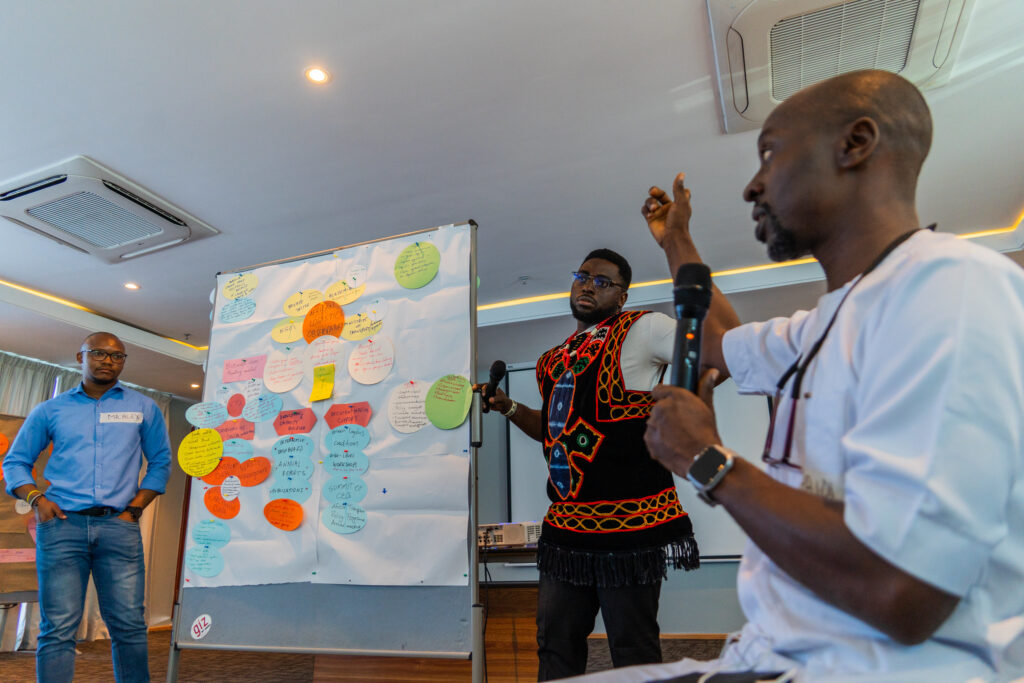
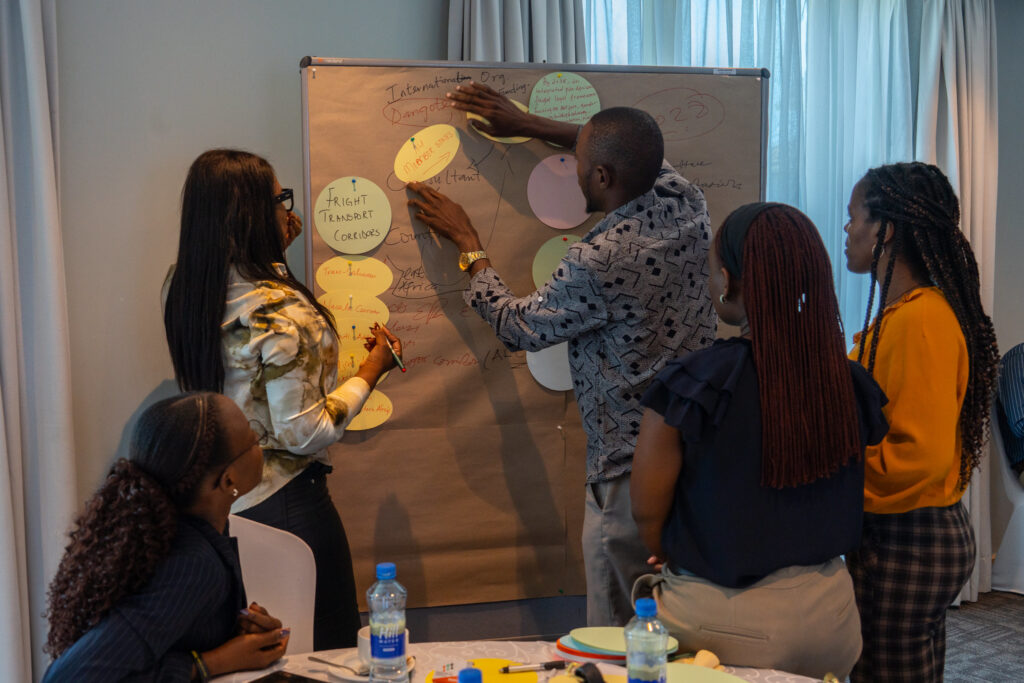
The Lab does not end with the final presentations. Participants will join the Rethinking Transport network, which aims to foster a community of professionals working on sustainable transport across the continent. The network will connect participants to facilitate ongoing exchange, encourage collaboration and help turn ideas into action.
The conversations in Dar es Salaam showed that there is no shortage of ideas. As the demand for freight continues to grow, the pressure to act will increase. The question is no longer whether freight systems need to change, but how quickly can that change happen and who will drive it forward.
If you are interested to engage with one of the groups to advance the solution or would be interested in hosting a Lab on a topic of your interest, please reach out to rethinking.transport@giz.de .
Rethinking Transport is a GIZ self-financed initiative, implemented by GIZ and Agora Verkehrswende.
Lab participants site visit to the Port of Dar es Salaam, Copyright GIZ & Kuehne Climate Center

Ragina Gitau
ragina.gitau@giz.de
Visit profile

Verena Knöll
verena.knoell@giz.de
Visit profile