
Thailand’s transport systems are increasingly vulnerable to climate-related disasters such as storm surges, flash floods, and heatwaves. These events damage roads, railways, and ports, disrupt travel and logistics, and threaten people’s livelihoods. As these disruptions become more frequent, the question is no longer if the transport sector should adapt, but how fast.
Recognising this urgency, GIZ Thailand, through the Integrated Urban Climate Action for Low-Carbon & Resilient Cities (Urban-Act) project, partnered with the Office for Transport and Traffic Policy and Planning (OTP) to strengthen institutional capacity and foster collaboration across government agencies.
Flash floods caused by continuous heavy rainfall are now affecting several provinces in Northern, Southern, and Northeastern Thailand. Major roads and railway lines have been damaged, disrupting travel and logistics. These events are no longer rare. They are a clear sign that climate change is happening — and we must be prepared.
Chutinthorn Mankong, Director of the Safety Planning Bureau at Office for Transport and Traffic Policy and Planning, Thailand
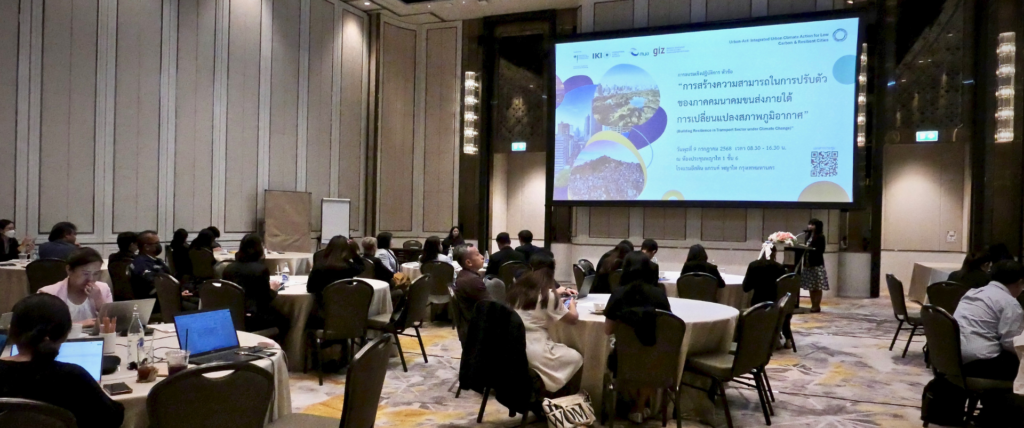
On 9 and 16 July 2025, GIZ Thailand and the Office of Transport and Traffic Policy and Planning (OTP) conducted a foundational training titled “Building Resilience in the Transport Sector under Climate Change.” Participants from 15 agencies under the Ministry of Transport, together with representatives from the Department of Public Works and Town & Country Planning (DPT), the Office of Natural Resources and Environmental Policy and Planning (ONEP), the Thai Meteorological Department (TMD), and the Department of Climate Change and Environment (DCCE), took part.
The training aimed to enhance understanding of climate adaptation in transport systems and introduce practical tools for developing climate-resilient transport infrastructure (CRTI). Sessions covered adaptation concepts, risk assessment, impact chains, and policy integration, with participants even engaging in a hands-on board game to simulate designing policy frameworks and adaptation measures. All of this addressed a crucial idea: adaptation is no longer optional, it’s essential.
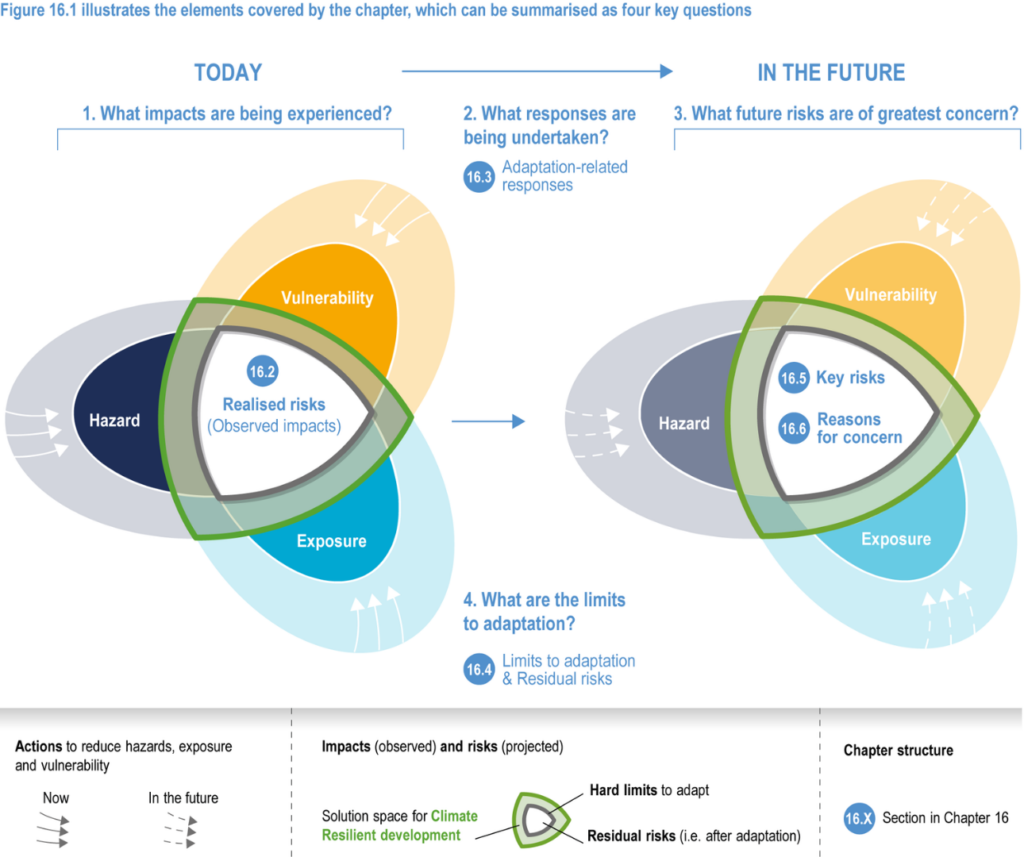
One key framework introduced during the training was the “Climate Change Impact Chain”, adapted from the IPCC’s Sixth Assessment Report. This framework helps connect the dots between climate hazards and their cascading consequences:
By using this approach, policymakers can move from reactive to proactive planning, designing infrastructure that anticipates and withstands the effects of climate change.
The effects of climate change on Thailand’s transport network are already visible:
Each of these impacts has ripple effects, from delayed goods delivery to economic slowdowns, showing how deeply climate risks are intertwined with national resilience.
Transport is the lifeblood of a country — connecting people, goods, services, and economic activities. Climate resilience in this sector is not just a technical necessity, but a strategic investment to protect economic activity and public services.
Dr. Dominika Kalinowska, Director of the GIZ Transport Programme for Thailand.
Dr. Nuwong Chollacoop, Director of the Low Carbon Energy Research Group at the National Energy Technology Center (ENTEC), highlighted how integrating climate risk assessments at the design stage can generate long-term economic value.
Adaptation may appear costly at first, but the returns are enormous. Investments in flood protection or elevating roads can deliver returns up to eleven times the initial cost, by preventing damage and maintaining economic connectivity.
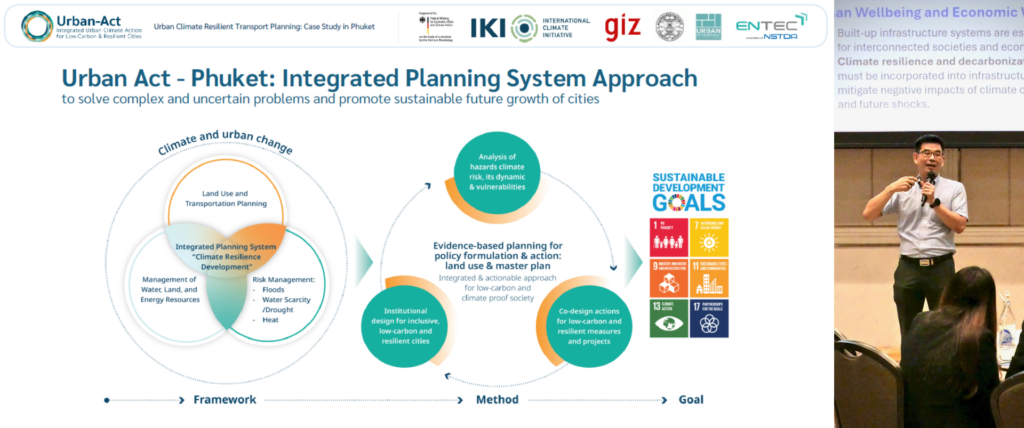
Several examples of adaptation are already taking shape:
Together, these initiatives demonstrate that resilience is not just environmental — it’s economic and social.
Addressing climate change requires both mitigation and adaptation, two complementary approaches that must move forward hand in hand.
Mitigation refers to any actions taken to reduce or prevent greenhouse gas emissions, or to enhance carbon sinks that remove these gases from the atmosphere. On the other hand, adaptation refers to actions that help reduce vulnerability to the current or expected impacts of climate change, like weather extremes and natural disasters, sea-level rise, biodiversity loss, or food and water insecurity.
In the transport sector, these two strategies are deeply connected. Transitioning to renewable energy and electric vehicles helps cut emissions, while strengthening the resilience of roads, railways, and ports ensures that communities can continue to move, trade, and thrive even as the climate changes.
For Thailand, this dual approach means more than protecting infrastructure, it’s about safeguarding livelihoods, maintaining vital services, and building trust that transport systems can withstand an uncertain future.
The collaboration between GIZ’s Urban-Act project and OTP marks an important milestone in Thailand’s climate journey. By bringing together technical experts, policymakers, and planners from multiple agencies, the initiative is building a shared understanding and a common direction for the future of transport resilience.
The message from Thailand’s transport sector is clear: climate adaptation is not just about infrastructure, it’s about safeguarding people, economies, and progress.
The Integrated Urban Climate Action for Low-Carbon & Resilient Cities (Urban-Act) project, commissioned by the German Federal Ministry for Economic Affairs and Climate Action (BMWK) under the International Climate Initiative (IKI), supports partner countries in Asia to plan and implement climate-resilient, low-carbon urban development.
© GIZ by Tooptong Liamsuwan


Issaree Jitrpatima
issaree.jitrpatima@giz.de
Visit profile

Tooptong Liamsuwan
tooptong.liamsuwan@giz.de