Kenya is in the midst of an accelerating shift to electric mobility: new policies, growing industry investment, and international support are reshaping the transport sector. But as the transition gains momentum, a critical question emerges: who is truly benefiting?
Historically, women have been underrepresented across the transport sector value chain. Globally, they account for only 12% of the workforce, with even lower representation in technical and leadership roles. Without deliberate action, this imbalance risks being replicated and deepened in the shift to electric mobility.
For the transition to be truly transformative, a deliberate and gender-just approach is required, one that actively addresses persistent gaps and ensures women are not left behind.
Encouragingly, gender inclusion is increasingly reflected in national policy frameworks. Kenya’s National E-Mobility Policy recognises that the transition should also support broader socio-economic development.
One of its key objectives is to scale up measures that promote EV adoption while enhancing gender equality and social inclusion. This includes targeted programmes designed to incentivise women’s participation in the e-mobility ecosystem. Such measures are particularly important in addressing barriers like limited access to finance, which continues to hinder women’s ability to own electric vehicles.
I have been an EV driver for two years and currently operate the vehicle through leasing. From my experience, EVs are cheaper to run than ICE vehicles. However, the high upfront purchase cost makes ownership difficult, especially for women who often have limited access to financing. I would therefore urge the government to introduce incentives or subsidies to reduce the initial cost and make EV ownership more accessible.
Agnes Atieno Aloo, an EV driver based in Nairobi
The policy also emphasises universal access in EV infrastructure, ensuring that charging stations and related facilities are accessible to all users, including women, persons with disabilities, and other marginalised groups. This is essential to ensure that the benefits of the transition are equitably distributed.
E-mobility enterprises are increasingly taking deliberate steps to recruit more women. As of 2024, women made up approximately 38% of employees in the sector, a figure that has continued to grow as companies expand.
Some companies have been particularly intentional in promoting women’s participation. Notably, BasiGo has prioritised gender inclusion across its workforce, as revealed during the recent C40 paratransit study tour, a field visit that brought together transport stakeholders from across the region to examine e-mobility operations up close.
Currently, female representation within the company stands at 40%, cutting across leadership positions all the way to operations and technical roles.
Dorcus Wanjiru Kamotho, representative from BasiGo
In addition, the Women in E-Mobility Network has emerged as a key platform for connecting women across the ecosystem. With over 100 members, the network provides mentorship, training opportunities, and access to resources that support women’s advancement in the sector.
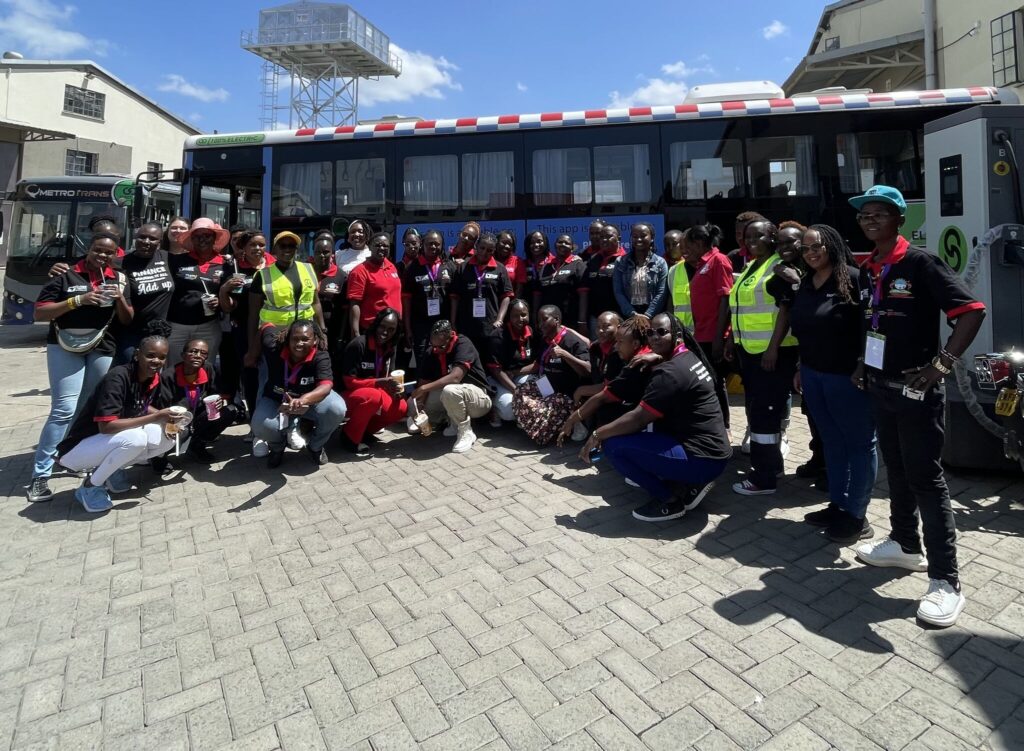
Despite progress in formal e-mobility companies, significant gender disparities remain in Kenya’s informal public transport sector. Structural barriers such as licensing requirements, safety concerns, limited access to training, and entrenched gender stereotypes continue to discourage women from entering driving roles.
Women remain underrepresented as e-bus drivers and are more likely to occupy conductor roles rather than driving positions. Addressing this imbalance requires targeted interventions, including training programmes that equip women with the necessary skills and support to transition into driving roles.
The progress seen in Kenya, from policy commitments to company-level hiring targets and grassroots networks, demonstrates that change is possible when it is intentional and that commitment is essential. Expanding access to finance, strengthening skills development, and creating clear pathways to leadership will be critical in ensuring that women can fully participate in and benefit from the evolving sector.
Only through a deliberate and inclusive approach the e-mobility transition can deliver on its promise of equity and transformation.
The Promotion of Electric Mobility in Kenya project is implemented by GIZ and commissioned by the German Federal Ministry for Economic Cooperation and Development (BMZ) with co-financing from the European Union.
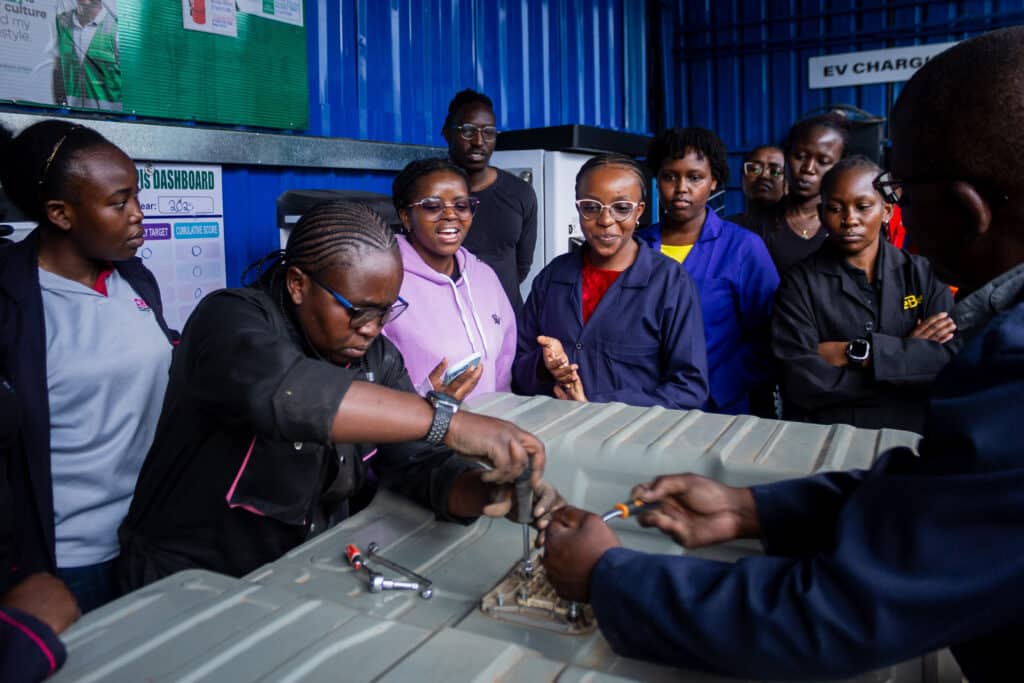
Women transport workers participate in a hands-on battery technology training session at Knights Energy Battery Testing Centre, Nairobi. © Knights Energy

Cynthia Kipsang
cynthia.kipsang@giz.de
Visit profile

Zaria Wangeci
zaria.wangeci@giz.de
Visit profile